Javascript Framework Link Accessibility: Ensuring Crawlability and SEO Performance
JavaScript framework link accessibility is critical for modern web applications built with React or Vue.js. This article details how client-side routing in Single Page Applications (SPAs) can hinder search engine crawlability and dilute link equity, potentially leading to orphaned pages. It provides best practices for implementing SEO-friendly links using standard <a> tags and framework-specific components like Next.js Link or Nuxt-link. Understanding these mechanisms ensures proper internal linking and robust semantic SEO for high-authority websites, especially for medical clinics.
Abdurrahman Şimşek, a Semantic SEO Strategist, specializes in optimizing complex web architectures for medical clinics. His expertise ensures that technical implementations, including link structures within JavaScript frameworks, align with advanced semantic engineering principles to build topical authority and improve search visibility.
To explore your options, contact us to schedule your consultation. You can also reach us via: Book a Semantic SEO Audit, Direct WhatsApp Strategy Line: +90 506 206 86 86
Web applications built with JavaScript frameworks like React and Vue.js present challenges for javascript framework link accessibility and search engine optimization. This article explains how links function in these environments and provides strategies to ensure an internal linking structure is crawlable, accessible, and optimized for SEO, which is crucial for high-authority medical websites.
What is JavaScript Framework Link Accessibility and Why it Matters for SEO?
JavaScript framework link accessibility is the ability of search engine crawlers and assistive technologies to discover, understand, and follow links within applications built with frameworks like React or Vue.js. Client-side routing, common in Single Page Applications (SPAs), can obscure navigation from crawlers, impacting SEO and user experience.
The problem occurs when developers use non-HTML `` elements for navigation, such as `div` or `span` elements with JavaScript `onClick` events. These elements may function for users but are often invisible to search engine bots, preventing them from crawling and indexing linked pages. For medical clinics, ensuring every page is discoverable is critical for patient acquisition and establishing authority.
The Fundamental Challenge: How SPAs Handle Navigation
Single Page Applications (SPAs) manage navigation dynamically on the client-side. Instead of requesting a new HTML document from the server for each page change, SPAs intercept navigation events and update content within the existing page using JavaScript. This provides a fluid user experience, but the browser’s URL changes without a full page reload. Search engines, which rely on parsing static HTML `href` attributes, must execute JavaScript to discover these dynamic links. Incorrect implementation of client-side routing can lead to significant crawlability issues.
Beyond Crawlability: User Experience and Assistive Technologies
Proper link semantics are important for user experience and accessibility standards. Assistive technologies like screen readers rely on the semantic meaning of HTML elements to interpret content. An `` tag with a valid `href` attribute signals a navigable link to these tools. Using non-semantic elements like `div` or `span` for navigation can make parts of a website unusable for individuals with disabilities, creating a poor user experience and potential legal compliance issues.
Best Practices for Crawlable Links in React, Vue.js, and Next.js
To implement SEO-friendly and accessible links in JavaScript frameworks, one must understand their routing mechanisms. The final rendered HTML must include a standard `` tag with a valid `href` attribute for all navigation. This ensures crawlable links for search engines and functionality for assistive technologies.
Leveraging Framework-Specific Link Components (React Router, Vue Router, Next.js)
JavaScript frameworks provide dedicated, SEO-friendly components for client-side navigation. In React applications, use React Router’s “ component. For Vue.js, use the “ component. Next.js offers its “ component. These components handle client-side routing while ensuring the HTML output is a standard `` tag with the correct `href` attribute, allowing search engines to discover and follow links, which preserves link equity and improves crawlability.
For example, instead of `
`, use `About` in React Router. In Vue.js, use `About` instead of a `div` with a click handler. Next.js’s “ component prefetches linked pages to enhance user experience without compromising SEO.
When and How to Use Native HTML `` Tags for External and Critical Internal Links
While framework-specific link components are ideal for internal navigation within a SPA, native HTML `` tags are necessary for certain scenarios. For all external links, use a standard `` tag. For critical internal links that must be discoverable if JavaScript fails, a native `` tag provides a fallback. This includes essential navigation links in the footer, header, or sitemaps. When using native `` tags for internal links, ensure they point to valid, crawlable URLs.

Implementing a Robust Internal Linking Architecture for Semantic SEO
An internal linking architecture, based on proper javascript framework link accessibility, is fundamental for semantic SEO. Abdurrahman Simsek emphasizes this architecture builds a coherent semantic network that signals topical authority to search engines. For complex medical websites, this strategy reduces the ‘Cost of Retrieval’ by making content relationships explicit and discoverable, aligning with JavaScript SEO for Healthcare principles.
Building E-E-A-T Driven Internal Linking: Beyond Basic Navigation
Strategic internal linking reinforces E-E-A-T signals by connecting related content, demonstrating topical coverage, and guiding users and crawlers through a logical information hierarchy. For a plastic surgery clinic, linking a procedure page to blog posts about recovery, patient testimonials, and surgeon bios creates a network of expertise. Each accessible link contributes to the topic’s authority, signaling to Google that the site is a definitive resource. This approach is critical for medical niches where trust and authority are paramount.
Automating and Auditing Link Structures for Scalability
On large medical websites, manual internal linking is unmanageable. Programmatic and automated internal linking solutions can integrate new content into the semantic network. Automation requires oversight. Regular audits are essential to fix broken links, orphaned pages, or suboptimal link equity flow. Tools like Google Search Console, Screaming Frog, and custom scripts help monitor link health and align the strategy with semantic SEO goals.
Future-Proofing Your Links: Adapting to Google’s Evolving Rendering Capabilities
Google’s rendering capabilities have evolved, allowing its crawlers to execute JavaScript and process dynamic content. However, relying solely on client-side rendering for link discovery is risky. Future-proofing links requires strategies that ensure discoverability despite potential crawler limitations or changes, which is important for single page application architectures.
Monitoring Link Crawlability with Google Search Console and Log File Analysis
Monitor link crawlability with Google Search Console’s URL Inspection tool to see how Google renders a page and which links it discovers. Check the ‘Coverage’ report for indexing issues and ‘Crawl Stats’ for unusual patterns. Log file analysis provides insights into Googlebot’s server interactions, revealing which URLs are requested and how frequently. This data can pinpoint pages that are not being crawled, allowing for intervention.
Server-Side Rendering (SSR) and Static Site Generation (SSG) for Enhanced Link Discovery
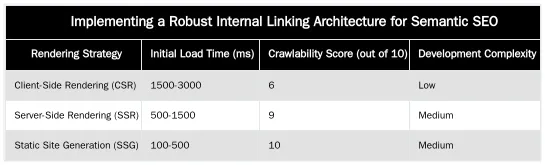
Server-Side Rendering (SSR) and Static Site Generation (SSG) mitigate client-side rendering challenges for critical pages. SSR pre-renders JavaScript applications on the server, sending fully formed HTML to browsers and crawlers. Links are immediately available in the initial HTML response, improving load times and ensuring discoverability. SSG generates all HTML files at build time, offering fast load times and guaranteed link crawlability. Both methods enhance link equity flow by presenting search engines with fully hydrated content, reducing their ‘Cost of Retrieval’ and improving SEO performance.
Partner with an Expert for Advanced JavaScript SEO & Semantic Strategy
JavaScript SEO and link accessibility require specialized expertise, particularly for medical websites. Abdurrahman Simsek, a London-based Semantic SEO Strategist, offers solutions to build high-authority semantic content networks. With 10 years of experience focusing on medical and plastic surgery clinics, he helps websites rank and convert patients. For a strategy that addresses technical nuances and drives growth, Book a Semantic SEO Audit. Direct WhatsApp Strategy Line: +90 506 206 86 86.
Conclusion
Proper link accessibility in JavaScript frameworks is essential for modern SEO. Implementing best practices—using framework-specific link components or native `` tags—guarantees crawlability, preserves link equity, and enhances user experience. This work is critical for building topical authority and reducing the ‘Cost of Retrieval’ for search engines, especially in competitive niches like medical clinics. Monitoring and strategic rendering choices future-proof a website’s organic visibility. For expert guidance, contact us, Book a Semantic SEO Audit, or use the Direct WhatsApp Strategy Line: +90 506 206 86 86.
Frequently Asked Questions
What is the most common mistake regarding javascript framework link accessibility?
The most common mistake is using non-standard HTML elements like `div` or `span` with `onClick` JavaScript events for navigation instead of proper `` links. This practice severely hinders javascript framework link accessibility, making it impossible for search engine crawlers and assistive technologies to discover and follow these navigation paths. Consequently, it prevents the flow of crucial link equity through your site, impacting SEO.
How do React Router’s “ components contribute to link accessibility?
React Router’s “ component is designed to enhance internal navigation within Single Page Applications (SPAs) while maintaining SEO best practices. Under the hood, it renders a standard HTML `` tag with a proper `href` attribute, ensuring that the links are crawlable by search engine bots. This approach effectively supports javascript framework link accessibility by providing client-side routing benefits without sacrificing discoverability.
Why is ensuring proper javascript framework link accessibility crucial for medical websites?
For medical practices, ensuring robust javascript framework link accessibility is paramount because it directly impacts the discoverability of vital patient information. If links to services, doctor profiles, or treatment pages are not crawlable, these pages become “orphaned” and cannot be indexed or ranked by Google. This prevents potential patients from finding critical information, severely limiting organic visibility for high-intent queries in competitive markets like Harley Street.
What tools can help verify the crawlability of links in a JavaScript application?
To check if your website’s links are accessible to search engines, you can start by disabling JavaScript in your browser and attempting to navigate your site. If the links function correctly without JavaScript, they are likely crawlable. For a more comprehensive audit, tools like Screaming Frog SEO Spider can be used with JavaScript rendering turned off to simulate a basic crawler’s perspective and identify undiscovered pages.
Does Vue Router’s history mode impact the accessibility of links for search engines?
Yes, using “history mode” in Vue Router significantly improves the accessibility of links for search engines. This mode generates clean, standard URLs (e.g., `/about-us`) rather than hash-based URLs (e.g., `/#/about-us`). Clean URLs are the preferred and most crawlable structure for SEO, ensuring each page has a unique, discoverable address that search engines can easily process and index.
How can Abdurrahman Şimşek help improve my website’s link accessibility and SEO?
Abdurrahman Şimşek, a Semantic SEO Strategist, specializes in optimizing complex JavaScript applications for search engines. He can conduct a comprehensive audit of your site’s technical SEO, including link accessibility, to identify and rectify issues that hinder crawlability and indexing. By implementing a robust internal linking architecture and semantic strategies, he ensures your medical practice’s website achieves maximum visibility and topical authority. You can book a Semantic SEO Audit at abdurrahmansimsek.com/contact/ or contact directly via WhatsApp at +90 506 206 86 86.
Ruxi Data brings together multi-model AI, automated website crawling, live indexation checks, topical authority mapping, E-E-A-T enrichment, schema generation, and full pipeline automation — from crawl to WordPress publish to social posting — all in one platform built for agencies and freelancers who run on results.