
Technical SEO for Medical Websites: Enhancing Patient Trust and Search Visibility
High-performance technical seo for medical websites is crucial for plastic surgeons and skin clinics to build patient trust and improve search visibility. This article details optimizing web architecture for crawlability, indexability, and user experience, addressing the healthcare sector’s YMYL requirements. Key strategies include enhancing Core Web Vitals like LCP, managing crawl budget efficiently, and implementing semantic HTML5 with JSON-LD schema. These technical foundations ensure medical content is accurately perceived by search engines, leading to higher rankings and attracting high-value patients.
Abdurrahman Şimşek, a Semantic SEO Strategist, emphasizes a semantic architecture approach to establish medical authority online. This methodology integrates advanced technical optimizations to ensure healthcare websites meet stringent search engine quality guidelines and effectively communicate expertise to potential patients.
To explore your options, contact us to schedule your consultation. You can also reach us via: Book a Semantic SEO Audit, Direct WhatsApp Strategy Line: +90 506 206 86 86, Hire as Semantic SEO Architect
For plastic surgeons and skin clinics, a high-performance web architecture builds patient trust, search visibility, and conversions. This guide covers the critical elements of technical seo for medical websites to create an efficient and authoritative digital presence. These principles help attract high-value patients and establish a credible online presence.
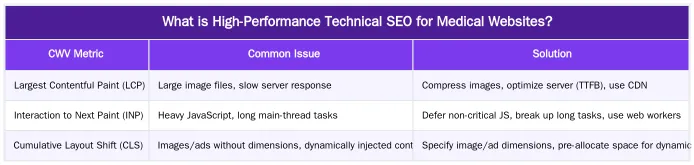
What is High-Performance Technical SEO for Medical Websites?
High-performance technical SEO for medical websites optimizes a site’s infrastructure for crawlability, indexability, and user experience, impacting visibility and credibility in search results. This approach addresses the healthcare sector’s need for accuracy, trust, and efficiency. It includes Core Web Vitals, crawl budget management, semantic HTML5, and structured data to convey expertise and trustworthiness to search engines and patients.
The YMYL Imperative: Why Technical Foundations Matter Most
Google’s Your Money Your Life (YMYL) guidelines place stringent requirements on websites offering health information or services. For plastic surgeons and skin clinics, every technical signal contributes to E-E-A-T (Experience, Expertise, Authoritativeness, and Trustworthiness). A technical foundation with a secure HTTPS connection and fast loading times directly impacts how search engines perceive the site’s credibility. These signals reinforce expertise with structured data and build patient trust when dealing with sensitive medical information.
Cost of Retrieval (CoR): Google’s Efficiency Metric for Healthcare Sites
Cost of Retrieval (CoR) is the computational resource Google uses to crawl, process, and index content. For medical sites with extensive information on procedures, conditions, and doctor profiles, a low CoR is critical. It signals to search engines that the site is well-organized and efficient, allowing more comprehensive indexing within a crawl budget. Optimizing for CoR helps valuable medical content get discovered and ranked, impacting search visibility and patient access to information.
Optimizing Core Web Vitals & Crawl Efficiency for Patient Trust
Optimizing Core Web Vitals and crawl efficiency builds patient trust and improves search rankings. These optimizations create a responsive user experience, indicating site quality to users and search engines. A technically sound site reduces user frustration, encourages engagement, and supports the patient journey from search to booking.
Achieving Sub-2.0s LCP & Seamless Interactions (FID/INP)
A Largest Contentful Paint (LCP) under 2.0 seconds is a critical goal for medical websites. LCP measures the loading performance of the largest content element, impacting user perception of speed. Optimizing for First Input Delay (FID) or Interaction to Next Paint (INP) makes the site respond quickly to user interactions like clicks or form submissions. Strategies include image optimization, reducing server response times (Time to First Byte – TTFB), deferring non-critical CSS and JavaScript, and using content delivery networks (CDNs). A fast, responsive site provides a better mobile booking experience for patient acquisition.
Strategic Crawl Budget Management for Extensive Medical Content
Medical websites often have extensive content, including procedure pages, doctor biographies, testimonials, and articles. Strategic crawl budget management helps search engines efficiently discover and index the most important pages. This involves optimizing XML sitemaps, configuring robots.txt files, and implementing a logical internal linking structure. Eliminating crawl waste like duplicate content allows search engines to focus resources on high-priority medical information. This approach helps build a semantic content network blueprint that prioritizes valuable content.
| LCP Score (seconds) | Conversion Rate (%) | Bounce Rate (%) |
|---|---|---|
| < 1.0 | 5.8 | 18.5 |
| 1.0 – 2.5 | 3.2 | 25.1 |
| 2.5 – 4.0 | 1.9 | 38.7 |
| > 4.0 | 0.7 | 55.3 |
Building Semantic Foundations: HTML5, Schema, and Mobile-First Indexing
Semantic foundations using HTML5, structured data, and a mobile-first approach are crucial for medical websites. These elements improve communication with search engines, enhance E-E-A-T signals, and provide a better user experience. A well-structured site is more easily understood by algorithms, improving visibility and trust.
Semantic HTML5 for Clarity & Search Engine Understanding
Semantic HTML5 elements structure medical content logically. Elements like <article> for blog posts, <section> for content blocks, <nav> for navigation, and <aside> for supplementary information improve accessibility and readability. This structure helps search engines comprehend a page’s purpose and key entities, reinforcing authority on medical topics. For example, a page on a surgical procedure benefits from semantic divisions for pre-op, procedure steps, and post-op care.
Leveraging JSON-LD Schema for Medical E-E-A-T & Visibility
Specific JSON-LD schema types communicate expertise, authority, and trust to search engines. For medical websites, this includes MedicalBusiness, Physician, MedicalProcedure, and LocalBusiness. Structured data enhances visibility in rich results like carousels or knowledge panels and improves local pack rankings. This markup helps search engines understand entity relationships, such as a doctor performing a procedure at a clinic, for Entity-Attribute-Value (EAV) SEO. A secure HTTPS connection is a foundational trust signal when handling patient data.
The ROI of Technical Excellence: Patient Conversions & Dominating Local Search
For plastic surgeons and skin clinics, the ROI from a high-performance web architecture is tangible, translating to improved patient conversion funnels, user experience, and local organic search dominance. In competitive markets like Harley Street, these technical advantages are essential for attracting high-value patients.
From Page Speed to Patient Bookings: Optimizing the Conversion Funnel
Technical performance directly correlates with patient conversion rates. A fast, mobile-friendly website with an intuitive information architecture supports the user journey from search to booking. When a site loads quickly, users are more likely to stay and complete conversion actions. This is how page speed impacts patient conversions, leading to more bookings. An optimized site provides an intuitive information architecture that guides patients. Leveraging patient testimonials to increase bookings builds trust through technical reliability and social proof.
Local Search Dominance: Harley Street & Beyond
Local search dominance in areas like Harley Street requires a technically optimized local SEO strategy. This includes precise local schema markup, optimized Google Business Profile listings, and geo-targeted content. A high-performance technical foundation helps local search queries, like “best plastic surgeon London,” lead to your practice. Building local trust with patient reviews and a fast mobile experience are crucial for converting local searchers into patients.
Conclusion
A high-performance web architecture is indispensable for plastic surgeons and skin clinics. Prioritizing Core Web Vitals, Cost of Retrieval optimization, semantic HTML5, and schema implementation builds an online presence that fosters patient trust and drives conversions. Applying these principles for technical SEO for medical websites creates a digital foundation compliant with YMYL guidelines and prepared for future search innovations. Invest in a well-engineered web presence to increase online authority and patient acquisition. For a tailored strategy, contact us. You can also Book a Semantic SEO Audit, reach out via Direct WhatsApp Strategy Line: +90 506 206 86 86, or Hire as Semantic SEO Architect.
Frequently Asked Questions
What is Cost of Retrieval (CoR) and why is it critical for medical websites?
Cost of Retrieval (CoR) represents the computational resources Google expends to crawl, process, and index your website’s content. For high-stakes YMYL (Your Money Your Life) topics like medicine, a low CoR signals an efficient, high-quality site. This efficiency is a foundational element of effective search engine optimization for healthcare platforms, directly impacting crawl priority and ranking potential.
How does a technically superior website build patient trust?
A fast, secure, and seamlessly functioning website provides a positive user experience, reflecting the clinic’s professionalism and attention to detail. Slow loading times or errors erode trust, while a high-performance site that respects user time builds confidence even before the first consultation. This technical excellence is crucial for establishing credibility in the medical field.
Are Core Web Vitals more important for medical sites than other industries?
Yes, because medical websites fall under Google’s YMYL (Your Money or Your Life) category, user experience signals like Core Web Vitals are scrutinized more heavily. A poor user experience can lead to patient frustration and mistrust, which Google’s algorithms are designed to penalize. Prioritizing these metrics is a key aspect of technical seo for medical websites to ensure patient safety and trust.
Can I ignore crawl efficiency if I have a small clinic website?
No website should ignore crawl efficiency, regardless of size. Even on small sites, wasted crawl budget on low-value pages (like duplicate content or parameter URLs) can delay the indexing of critical service and procedure pages. This inefficiency impacts your visibility in search results and can hinder the overall performance of your site’s search engine optimization.
What is the first step in a technical SEO audit for a plastic surgeon?
The first step is a comprehensive crawl analysis combined with a Core Web Vitals assessment. This data-driven approach identifies immediate issues with page speed, mobile usability, and crawlability, forming the baseline for a strategic plan. Such an audit is fundamental for optimizing the digital presence of a medical practice.
How can Abdurrahman Şimşek help improve my clinic’s web architecture?
Abdurrahman Şimşek, a Semantic SEO Strategist, specializes in creating high-performance web architecture for medical and plastic surgery clinics. You can book a Semantic SEO Audit to identify specific areas for improvement, or contact him directly via WhatsApp at +90 506 206 86 86 for a strategic discussion.
Ruxi Data brings together multi-model AI, automated website crawling, live indexation checks, topical authority mapping, E-E-A-T enrichment, schema generation, and full pipeline automation — from crawl to WordPress publish to social posting — all in one platform built for agencies and freelancers who run on results.