
Contextual Anchor Text: Boosting Link Relevance and Topical Authority
Contextual anchor text is crucial for modern SEO, guiding search engines to understand link relevance and semantic relationships between web pages. This guide explains how strategic use of contextual anchor text, combined with surrounding link context, enhances PageRank flow and builds topical authority. Readers will learn to optimize various anchor text types, implement internal linking best practices, and avoid common pitfalls to improve user experience and overall SEO performance, especially in E-E-A-T sensitive niches.
Abdurrahman Şimşek, a Semantic SEO Strategist with 10+ years of experience, specializes in building high-authority semantic content networks for medical clinics. His expertise in holistic SEO strategy and semantic engineering underpins the advanced insights provided in this guide.
To explore your options, contact us to schedule your consultation. You can also reach us via: Book a Semantic SEO Audit, Direct WhatsApp Strategy Line: +90 506 206 86 86
This guide explains how contextual anchor text conveys semantic relevance to search engines and enhances website authority, particularly for E-E-A-T-sensitive niches like medical practices. It covers best practices, common pitfalls, and how strategic link context improves SEO performance.
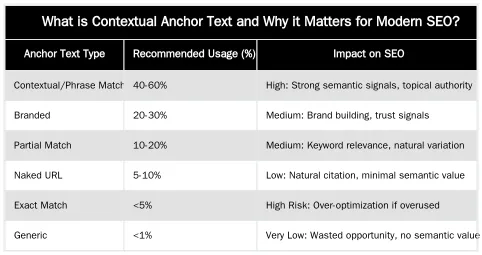
What is Contextual Anchor Text and Why it Matters for Modern SEO?
Contextual anchor text is the clickable text in a hyperlink relevant to the surrounding content that describes the destination page. It provides semantic signals to search engines about the linked content’s topic. This helps search engines understand the relationship between pages, improving PageRank flow and establishing topical authority.
The precise wording of link text, combined with its surrounding sentences, influences how search engines interpret a linked page’s value and relevance. This goes beyond keyword matching to semantic relationships between entities. For specialized fields like medical practices, this precision is crucial for conveying expertise and trustworthiness.
Beyond Keywords: The Semantic Power of Link Context
Link context extends beyond the anchor’s words. Search engines analyze the sentence, paragraph, and section where a link is placed. This surrounding text provides semantic signals about the linked content’s topic and relevance. For instance, linking “breast augmentation techniques” within a paragraph about surgical options for cosmetic enhancement offers a richer signal than a “read more” link. This understanding improves entity recognition, allowing search engines to connect related concepts and clarify your site’s topical coverage. This approach is fundamental to a semantic internal linking strategy.
Navigating Anchor Text Types: A Strategic Approach for Link Relevance
Anchor text optimization requires a diverse strategy, using various link text types to create a natural link profile. Each type serves a purpose in conveying link relevance and should be used judiciously to avoid over-optimization penalties.
- Exact Match Anchor: Uses the precise target keyword of the destination page (e.g., “rhinoplasty surgery”). Use sparingly, as overuse can appear manipulative.
- Partial Match Anchor: Includes the target keyword along with other descriptive words (e.g., “learn about modern rhinoplasty surgery”). Offers a natural balance.
- Branded Anchor: Uses your brand or website name (e.g., “Abdurrahman Şimşek”). Essential for brand recognition and authority.
- Naked URL Anchor: The raw URL itself (e.g., “https://example.com”). Often occurs naturally in citations or references.
- Generic Anchor: Non-descriptive phrases (e.g., “click here,” “read more”). Provides minimal semantic value and should be minimized.
- Contextual Anchor: Descriptive, relevant text that naturally flows with the surrounding content, providing strong semantic cues (e.g., “understanding the benefits of a tummy tuck procedure”). This is the most valuable for semantic SEO.
Balancing Diversity for a Natural Link Profile
A diverse anchor text profile appears natural to search engines and avoids algorithmic flags. Overusing one type, especially exact match anchors, can signal manipulation and lead to penalties. A balanced mix emphasizing context-rich anchors creates a healthy backlink and internal link strategy. For instance, a medical website might use branded anchors for its homepage, partial match for service pages, and descriptive contextual anchors in blog posts linking to educational content. This variety signals a natural linking pattern, enhancing site authority and link relevance.
Implementing Contextual Anchor Text: Best Practices for Internal Linking
Effective contextual anchor text for internal linking requires weaving relevant links into content to reinforce topical hubs and improve user navigation. Identify semantically related pages. When writing or updating content, link to related pages using descriptive phrases that preview the destination content. This distributes PageRank and guides users through the site’s information architecture.
For example, an article on “symptoms of rosacea” could link the phrase “effective rosacea treatments” to a service page detailing treatment options. This creates a clear path for users and search engines. Prioritize links that add value to the reader, ensuring the anchor text flows naturally within the sentence.
Crafting Contextual Anchors for an E-E-A-T-Driven Architecture
Anchor text should align with E-E-A-T (Experience, Expertise, Authoritativeness, Trustworthiness) principles, particularly for Your Money Your Life (YMYL) content like medical information. For a plastic surgery clinic, anchors should describe the destination page and reinforce the clinic’s authority and surgeon’s expertise. For instance, linking from a page on “post-operative care for breast augmentation” to a page on “Dr. Smith’s breast augmentation procedure” with the anchor “Dr. Smith’s approach to breast augmentation” signals expertise and relevance.
A symptom page on “signs of skin cancer” could link to a procedure page on “Mohs surgery for skin cancer removal” using the anchor “advanced Mohs surgery techniques.” Precise, descriptive anchors help Google understand your site’s knowledge depth and the relationships between complex medical entities. This strategic linking is a cornerstone of an E-E-A-T-driven internal linking architecture.
Avoiding Pitfalls: Common Mistakes in Contextual Anchor Text Optimization
Common mistakes can undermine anchor text optimization and harm SEO performance. Over-optimization, where too many links use exact match keywords, signals an unnatural linking pattern. Keyword stuffing in anchors, such as “best plastic surgeon London facelift surgery cost,” is another detrimental practice. These tactics can trigger spam filters and lead to penalties or devaluations.
Using generic phrases like “click here” or “learn more” provides no semantic value and wastes link equity. Neglecting surrounding content is also a mistake; a well-chosen anchor loses impact if the surrounding text is irrelevant. Focus on user-centric, natural language that enhances the reader’s experience.
The Detrimental Effects of Generic and Over-Optimized Anchors
Generic anchors waste opportunities to convey relevance and pass link equity. A link that says “here” gives search engines no insight into the linked page’s topic, diminishing its potential to rank. Conversely, over-optimized anchors with a high frequency of exact match keywords can be perceived as an attempt to manipulate rankings. This can lead to algorithmic flags, penalties, suppressed rankings, or de-indexing. For example, if every internal link to a “liposuction” page uses “liposuction surgery,” it signals an artificial pattern. A natural approach involves variations like “fat removal procedure,” “body contouring options,” or “liposuction techniques,” which provide link context without over-optimization.
Contextual Anchor Text in Semantic SEO: An Expert’s Perspective
Contextual anchor text is a cornerstone of building a Semantic Content Network. Semantic SEO Strategist Abdurrahman Şimşek states that precise link context aids Google’s Knowledge Graph and entity recognition. This is crucial for complex medical topics like plastic surgery, where precision and verifiable authority are paramount. Defining the relationship between concepts through descriptive link text optimizes for ‘Cost of Retrieval,’ making it easier for search engines to understand and categorize information.
Tools like Ruxi Data can identify and map semantic relationships at scale, facilitating automated internal linking strategies. This ensures every link contributes to a cohesive content web, signaling deep topical expertise. For medical websites, where E-E-A-T is a critical ranking signal, this semantic precision establishes credibility and trust with search engines and patients. For more, see Google’s guidance on how search works.
Reinforcing Topical Authority with Precise Link Context
Contextual anchors within a well-structured content network signal deep topical expertise to search engines. For YMYL niches like plastic surgery, demonstrating comprehensive knowledge is key to ranking. When a page on “rhinoplasty recovery” links to “post-operative care instructions” with the anchor “detailed post-operative care instructions for rhinoplasty,” it reinforces authority on the topic of rhinoplasty. This granular link context helps search engines understand relationships between sub-topics and main entities, building a stronger topical map. This is vital for clinics in competitive markets like Harley Street, as it contributes to their perceived expertise and trustworthiness. A semantic content network blueprint relies on this principle.
Future-Proofing Your Links: The Enduring Value of Contextual Anchor Text
Strategic contextual anchor text makes a linking strategy resilient to algorithm updates. As search engine AI and NLP advance, their reliance on contextual cues increases. A semantically rich internal linking structure is more algorithm-proof. This approach moves beyond keyword manipulation, focusing on a helpful, interconnected user experience that aligns with how search engines understand information.
Search engines’ ability to interpret nuance and content relationships will become more important. Contextual anchors facilitate this understanding, contributing to a stable and effective SEO strategy. Investing in link context helps medical clinics build a digital presence that ranks for relevant queries and attracts patients.
Measuring the Impact: How Contextual Anchors Drive SEO Performance
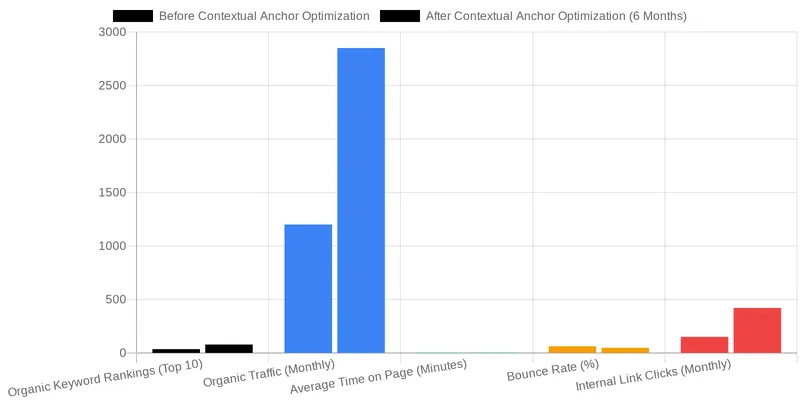
Monitor anchor text effectiveness by observing key SEO metrics. Improvements in organic rankings, increased organic traffic, and enhanced user engagement (like time on page and reduced bounce rates) indicate success. For medical clinics, this translates into more patient inquiries and bookings. Contextual anchors create clear, semantically relevant pathways, contributing to an efficient patient acquisition funnel.
Conclusion
Strategic contextual anchor text is fundamental to modern SEO, particularly for medical websites in E-E-A-T-sensitive niches. Well-crafted link text provides semantic signals, enhances user navigation, reinforces topical authority, and improves site performance. Avoiding over-optimization and generic anchors is crucial for a healthy link profile. As search engines evolve, the value of context-rich links grows, making them essential to a future-proof SEO strategy. For London-based medical practices, partnering with a semantic SEO specialist is a strategic imperative. To discuss a tailored semantic strategy for your clinic, contact us.
Frequently Asked Questions
What is the difference between anchor text and contextual anchor text?
While all anchor text is the clickable text in a hyperlink, contextual anchor text specifically refers to text that is highly relevant to the surrounding content and the destination page. It provides strong semantic signals to search engines, helping them understand the linked content’s topic and relevance. This strategic use significantly enhances SEO value and user experience.
Why should I avoid using generic anchor text like ‘click here’ for my website?
Generic phrases like ‘click here’ offer no descriptive value to search engines or users about the linked page’s content. Employing descriptive, relevant link text is crucial for improving both SEO and user experience. It helps search engines categorize your content more effectively and improves accessibility.
What is anchor text over-optimization, and how does it relate to contextual anchor text?
Anchor text over-optimization occurs when you excessively use the same keyword-stuffed, exact-match phrases for too many links, which can appear unnatural. While contextual anchor text is vital for relevance, over-optimizing it can lead to penalties, as search engines may view it as a manipulative tactic. A natural, diverse link profile is always recommended for long-term SEO success.
How does using relevant link text influence topical authority for medical websites?
Consistently using descriptive and relevant link text for internal links helps Google understand the relationships between your pages and the depth of your content. For medical sites, this reinforces your expertise and demonstrates comprehensive coverage of specific health topics, thereby building strong topical authority. It signals to search engines that your site is a reliable and authoritative resource.
What’s a good mix of link text types for a plastic surgery website, considering contextual anchor text principles?
A natural and effective link profile for a plastic surgery website should include a diverse mix of types. This includes partial-match keywords (e.g., ‘rhinoplasty procedures’), branded terms (e.g., ‘Abdurrahman Şimşek’s clinic’), and topic-based phrases (e.g., ‘guide to facial rejuvenation’). This variety, guided by contextual anchor text principles, appears more organic and is safer for SEO, avoiding over-optimization.
How can Abdurrahman Şimşek help my medical clinic improve its semantic SEO and link strategy?
Abdurrahman Şimşek specializes in building high-authority Semantic Content Networks for medical clinics, leveraging 10+ years of experience in Semantic Engineering. He can conduct a comprehensive Semantic SEO Audit to optimize your site’s link strategy, including the strategic use of descriptive link text. To discuss your specific needs, you can book a Semantic SEO Audit or contact directly via WhatsApp at +90 506 206 86 86.
Ruxi Data brings together multi-model AI, automated website crawling, live indexation checks, topical authority mapping, E-E-A-T enrichment, schema generation, and full pipeline automation — from crawl to WordPress publish to social posting — all in one platform built for agencies and freelancers who run on results.