
Physician Medicalprocedure Schema: Enhancing Harley Street Clinic Visibility
Implementing physician medicalprocedure schema is crucial for Harley Street clinics to achieve prominent online visibility. This guide explains how structured data, including MedicalBusiness and LocalBusiness schema, enhances Google’s understanding of medical expertise and services. By accurately detailing qualifications and procedures, clinics improve entity recognition, secure rich snippets, and gain SERP features, directly impacting patient acquisition. Proper schema implementation ensures search engines precisely interpret your offerings, establishing authority and trustworthiness in the competitive London healthcare market.
Abdurrahman Şimşek, a London-based Semantic SEO Strategist with 10 years of experience, specializes in building high-authority semantic content networks for medical clinics. His expertise in Medical SEO and structured data implementation helps healthcare providers dominate local organic search.
To explore your options, contact us to schedule your consultation.
For Harley Street clinics aiming to dominate London’s competitive digital landscape, understanding and implementing physician medicalprocedure schema is no longer optional—it’s a strategic imperative. This comprehensive guide will demystify structured data for healthcare providers, offering actionable insights to enhance your online visibility and attract high-value patients. Proper schema implementation ensures search engines accurately interpret your expertise and services, crucial for establishing authority in the medical field.
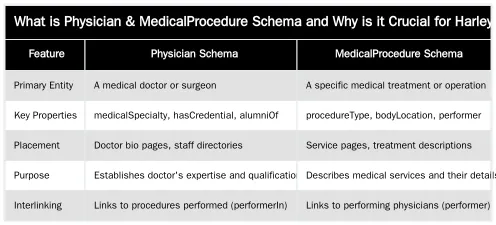
What is Physician & MedicalProcedure Schema and Why is it Crucial for Harley Street Clinics?
Physician schema describes a medical doctor, detailing their qualifications, specialties, and affiliations. MedicalProcedure schema, conversely, outlines specific treatments, operations, or diagnostic processes offered. Together, these structured data types provide search engines with explicit, machine-readable information about healthcare providers and their services, which is vital for establishing credibility in high-stakes Your Money Your Life (YMYL) medical content.
For Harley Street clinics, where competition for patient attention is intense, this precise communication helps Google understand and rank medical entities more effectively. It ensures that when potential patients search for specific treatments or specialists in London, your clinic’s expertise is accurately represented and prominently displayed.
The Foundational Role of Structured Data in Healthcare SEO
Structured data acts as a translator, converting complex medical information on your website into a format search engines can easily process. This improves entity recognition, allowing algorithms to connect specific doctors with their areas of expertise and the procedures they perform. For healthcare provider schema, this clarity is paramount, as it directly impacts how search engines assess the experience, expertise, authoritativeness, and trustworthiness (E-E-A-T) of medical content and practitioners.
How Does Structured Data Enhance Google’s Understanding of Medical Expertise?
Structured data, particularly when implemented with specific properties for medical professionals and procedures, directly feeds into Google’s Knowledge Graph. This graph is a vast database of entities and their relationships, which Google uses to understand the real world. By marking up your content with relevant schema, you explicitly tell Google about your clinic’s doctors, their specializations, and the treatments they offer. This explicit signaling helps Google build a comprehensive profile of your medical practice, strengthening its E-E-A-T assessment.
Specific properties within these schema types, such as medicalSpecialty, hasCredential, performer, and procedureType, act as strong signals of expertise and authority. They allow search engines to verify a doctor’s qualifications and link them directly to the services provided. This level of detail is crucial for medical SEO, as it helps differentiate reputable clinics in competitive markets like London.
Connecting Entities: From Doctor Bios to Specific Treatments
A robust entity graph for a clinic is created by strategically linking Physician schema on individual doctor bio pages with MedicalProcedure schema on corresponding service pages. For example, a surgeon’s profile page would use Physician schema to detail their credentials and specialties. A page describing a specific cosmetic procedure would then use MedicalProcedure schema, explicitly linking back to the performing surgeon via the performer property. This interconnectedness provides Google with a holistic view of your practice’s offerings and the experts behind them, significantly boosting your semantic authority. Learn more about configuring medical schema for surgeons by visiting our medical schema guide.
Implementing Physician & MedicalProcedure Schema: A Step-by-Step Guide for Clinics
Implementing structured data using JSON-LD (JavaScript Object Notation for Linked Data) is the recommended method for medical clinics. JSON-LD scripts are typically placed in the <head> or <body> of your HTML, making them easy for search engines to parse without affecting visual content. The process involves identifying the relevant entities on your page, selecting the appropriate schema types, and populating their properties with accurate data.
For a doctor’s profile page, you would use Physician schema. For a service page detailing a treatment, you would use MedicalProcedure schema. The key is to be precise and comprehensive with the properties you include, ensuring every piece of information contributes to a clear understanding of the medical entity.
Essential Properties for Physician and MedicalProcedure Schema
Understanding the core properties for each schema type is fundamental for effective implementation. Here are some essential ‘must-have’ properties:
- Physician Schema:
@type: “Physician”name: The doctor’s full name.medicalSpecialty: The doctor’s primary medical specialty (e.g., “PlasticSurgery”, “Dermatology”).alumniOf: The institutions where the doctor received their education.hasCredential: Professional credentials (e.g., “MD”, “FRCS”).url: URL of the doctor’s profile page.image: URL of the doctor’s professional photo.address: The clinic’s address where the doctor practices.telephone: Contact number for appointments.performerIn: Links to MedicalProcedure entities performed by this physician.
- MedicalProcedure Schema:
@type: “MedicalProcedure”name: The name of the procedure (e.g., “Rhinoplasty”).procedureType: The type of procedure (e.g., “SurgicalProcedure”, “DiagnosticProcedure”).bodyLocation: The part of the body the procedure affects.description: A brief overview of the procedure.performer: Links to the Physician entity performing the procedure.potentialRisks: Common risks associated with the procedure.preparation: Instructions for patient preparation.outcome: Expected results or benefits.
For a more detailed guide on automated schema markup, refer to our automated schema markup guide.
Schema Implementation Checklist and Validation Tools
Before deploying your schema, follow this checklist:
- Ensure all required properties are populated accurately.
- Verify that entities are correctly linked (e.g., Physician to MedicalProcedure).
- Use absolute URLs for all image and page links within the schema.
- Test your JSON-LD code using Google’s Rich Results Test to identify potential errors and preview rich snippet eligibility.
- Utilize the Schema.org Validator for comprehensive schema compliance checks.
Refer to the official Schema.org documentation for Physician and MedicalProcedure for the most up-to-date property definitions and usage guidelines.
Beyond Basics: Advanced Schema Strategies for Dominating London’s Medical SERPs
For Harley Street clinics, basic schema implementation is merely the starting point. Advanced semantic SEO strategies are essential to truly dominate London’s competitive medical search landscape. This involves not just marking up individual entities but building a comprehensive semantic content network that clearly communicates your clinic’s entire ecosystem to search engines. Leveraging expertise in semantic engineering, clinics can create a robust digital presence.
This holistic approach extends beyond individual doctor or procedure pages. It encompasses the entire clinic, its locations, and its unique value proposition within the London market. By meticulously structuring all relevant data, clinics can establish unparalleled topical authority.
Integrating MedicalBusiness & LocalBusiness for Hyper-Local Dominance
To achieve hyper-local dominance in London, combining MedicalBusiness and LocalBusiness schema with your Physician and MedicalProcedure markup is crucial. LocalBusiness schema provides essential details like address, telephone, opening hours, and geo-coordinates, which are critical for local search rankings. MedicalBusiness refines this by specifying the type of medical facility (e.g., “MedicalClinic”, “PlasticSurgery”).
When these schema types are interconnected, they provide Google with explicit signals about your clinic’s physical location, services, and the experts within it, directly impacting visibility for geo-targeted searches in affluent London postcodes like Marylebone, Mayfair, and Knightsbridge. This integrated approach is a cornerstone of a successful Harley Street SEO strategy.
The Ruxi Data Advantage: Semantic Networks for Unrivaled Authority
The Ruxi Data framework represents an advanced approach to semantic content networks, moving beyond simple schema markup to create deeply interconnected entity relationships. This involves mapping all relevant entities—doctors, procedures, conditions treated, clinic locations, and even related research or publications—into a cohesive knowledge graph. By doing so, a clinic can build unrivaled topical authority, demonstrating comprehensive expertise across its chosen medical fields.
This semantic engineering approach helps search engines understand the depth and breadth of a medical specialist’s knowledge and the clinic’s overall competence. It signals a high degree of E-E-A-T, which is paramount for YMYL content. For further insights into advanced structured data applications, consult relevant resources from Google Search Central.
What Rich Snippets and Enhanced Visibility Mean for Your Harley Street Practice
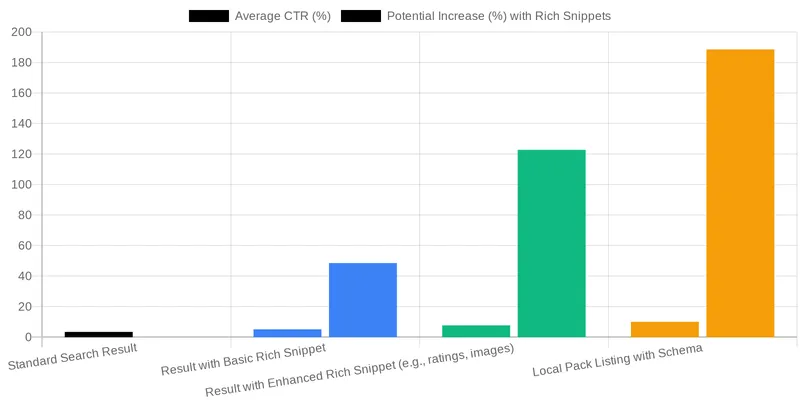
Proper schema implementation translates into tangible benefits for your Harley Street practice, primarily through enhanced visibility in search engine results pages (SERPs). The most immediate outcome is the potential for rich snippets and other SERP features. These visually appealing enhancements, such as star ratings, procedure details, or doctor information directly under your search listing, make your clinic stand out from competitors.
Beyond aesthetics, rich snippets lead to significantly improved click-through rates (CTR) because they offer more information at a glance, instilling greater trust in potential patients. This increased visibility also contributes to improved local search rankings, ensuring your clinic appears prominently for “near me” searches or location-specific queries within London. Ultimately, this enhanced presence builds patient trust and drives more qualified organic traffic to your website.
Measuring Success: From SERP Features to Patient Acquisition
Monitoring the success of your schema implementation involves tracking several key performance indicators (KPIs). Start by observing your Google Search Console reports for rich result impressions and clicks. A noticeable increase in these metrics indicates successful schema parsing and display. Beyond technical metrics, track improvements in local search rankings for relevant keywords and the overall organic traffic to your doctor and service pages.
The ultimate measure of success is the conversion of this enhanced visibility into patient inquiries and bookings. By integrating schema performance data with your clinic’s patient acquisition funnels, you can directly attribute online growth to your structured data efforts. Staying informed on broader trends in healthcare digital marketing can also provide context for your performance, as highlighted in various industry reports on healthcare digital marketing trends.
Ready to Elevate Your Clinic’s Online Presence with Expert Schema Implementation?
Implementing effective physician medicalprocedure schema requires a nuanced understanding of both medical terminology and advanced semantic SEO. For Harley Street clinics seeking to stand out, a specialized approach is essential. Leveraging structured data correctly can significantly boost your online visibility, attract more qualified patients, and solidify your clinic’s authority in the digital realm.
Partner with a Specialist in Medical SEO for Harley Street
Navigating the complexities of structured data and semantic SEO for the London private healthcare market demands specific expertise. Partnering with a specialist who understands the unique competitive landscape of Harley Street clinics ensures your digital strategy is precise and impactful. This collaboration can transform your online presence, driving sustainable organic growth and patient acquisition. Discover more about our specialized medical schema services for surgeons and clinics.
Conclusion
Implementing physician and medical procedure schema is a fundamental step for Harley Street clinics aiming to excel in London’s competitive digital environment. By providing search engines with clear, structured data about your medical professionals and services, you enhance Google’s understanding of your expertise, improve E-E-A-T signals, and unlock valuable SERP features. Beyond basic markup, advanced semantic strategies, including the integration of MedicalBusiness and LocalBusiness schema, are crucial for building topical authority and dominating local search. This comprehensive approach leads to increased visibility, higher click-through rates, and ultimately, greater patient trust and acquisition. To ensure your clinic harnesses the full power of semantic SEO and structured data, consider partnering with an expert. Visit abdurrahmansimsek.com to explore specialized semantic SEO and web development services tailored for leading medical clinics in London.
Frequently Asked Questions
What is the most critical schema combination for a surgeon’s website?
The most effective structured data strategy for a surgeon’s website involves a combination of types. You should implement Physician schema on individual bio pages, MedicalProcedure schema on specific service pages, and MedicalClinic schema for each physical location. This comprehensive approach provides search engines with a clear, structured understanding of your practice’s entities and services.
Does implementing physician medicalprocedure schema guarantee rich snippets?
While implementing physician medicalprocedure schema does not guarantee rich snippets, it is a fundamental prerequisite. Correct and comprehensive structured data significantly increases the probability of Google awarding enhanced search results, such as star ratings or detailed procedure information. These rich snippets can greatly boost your click-through rates and visibility in competitive search results.
Can I use the same Physician schema for multiple clinic locations?
No, each distinct physical clinic location should ideally have its own dedicated MedicalClinic schema. The Physician schema, representing the individual surgeon, can then be appropriately linked to the specific locations where they practice. This is achieved using properties like ‘worksFor’ or ‘affiliation’ within the structured data, ensuring accuracy for multi-location practices.
How often should medical schema be updated?
Medical structured data should be updated whenever there are changes to your practice’s information or services. This includes introducing new procedures, altering clinic addresses, or updating professional affiliations and qualifications. Regular validation and maintenance of your schema are crucial components of ongoing technical SEO to ensure accuracy and relevance.
Is it better to use a plugin or manual JSON-LD for medical schema?
For optimal control and precision, manually implementing JSON-LD in the website’s <head> section is generally superior for complex medical entities. While plugins offer convenience, they often lack the granular control and flexibility required for detailed medical procedure schema and custom attributes. Manual implementation allows for tailored and robust structured data that truly reflects your clinic’s offerings.
How can Harley Street clinics get expert help with their structured data implementation?
Harley Street clinics can secure expert assistance by consulting with a specialist in medical SEO and semantic engineering. Professionals like Abdurrahman Şimşek offer tailored strategies for implementing physician medicalprocedure schema and other structured data. This ensures your clinic’s online presence is optimized for Google’s understanding, leading to enhanced visibility and patient acquisition.
Ruxi Data brings together multi-model AI, automated website crawling, live indexation checks, topical authority mapping, E-E-A-T enrichment, schema generation, and full pipeline automation — from crawl to WordPress publish to social posting — all in one platform built for agencies and freelancers who run on results.