
Medical Directory SEO: Boosting Patient Bookings With Entity Optimization
Effective medical directory seo is crucial for healthcare providers to increase patient bookings and establish online authority. This strategy involves optimizing doctor profiles and practice listings across various platforms using entity optimization principles. By ensuring consistent NAP data, implementing structured data, and building a robust digital identity, practices can enhance their visibility and E-E-A-T signals. This approach helps search engines understand and trust a medical entity, driving potential patients from initial search to appointment booking.
Abdurrahman Şimşek, a Semantic SEO Strategist, provides expertise in leveraging advanced entity optimization techniques to improve healthcare visibility. This content delivers actionable strategies for medical professionals seeking to enhance their digital presence and patient acquisition.
To explore your options, contact us to schedule your consultation.
In the highly competitive landscape of private healthcare, simply having an online presence is no longer enough. This article will reveal how advanced medical directory seo, powered by entity optimization, can significantly increase patient bookings, establish dominant online authority, and ensure your practice stands out to the right patients. Understanding and implementing these strategies is crucial for any medical professional aiming to thrive in the digital age, particularly within specialized sectors like aesthetic surgery in locations such as London.
What is Medical Directory SEO & Why it Matters for Surgeons?
Medical directory SEO involves optimizing a healthcare provider’s presence across various online directories and listing platforms. This extends beyond basic contact information to encompass detailed profiles, service descriptions, patient reviews, and structured data. For surgeons, particularly in competitive areas like London’s Harley Street, effective optimization builds crucial E-E-A-T (Expertise, Experience, Authoritativeness, Trustworthiness) signals, directly influencing local search rankings and patient acquisition.
In 2026, patients frequently begin their healthcare journey with online searches, often consulting multiple sources before booking an appointment. A well-optimized presence in clinical directories ensures that a surgeon’s practice appears prominently and credibly. This strategy is fundamental for establishing trust and visibility, guiding potential patients from initial search to actual booking. It is a critical component of a comprehensive digital marketing strategy for any medical practice.
How Entity Optimization Powers Medical Directory Performance?
Entity optimization in the context of medical directories focuses on presenting a unified, consistent, and semantically rich profile of a medical practice or individual physician across the web. Search engines interpret these consistent data points as strong signals of authenticity and relevance. This process goes beyond simple listing creation, aiming to build a robust digital identity that search algorithms can easily understand and trust.
The foundational elements include precise Name, Address, Phone (NAP) consistency across all platforms, coupled with the strategic implementation of structured data. When a surgeon’s information is identical on their website, Google Business Profile, and various medical directories, it reinforces their identity as a distinct entity. This consistency is a primary driver for improved local search visibility and strengthens the overall digital footprint of the practice.
The Role of NAP Consistency and Structured Data
Accurate and consistent NAP information is paramount. Any discrepancies, even minor ones, can confuse search engines and dilute trust signals. Beyond NAP, structured data, specifically doctor profile schema and MedicalBusiness JSON-LD, provides explicit information about the physician, their specialties, services, and location in a machine-readable format. This data helps search engines understand the context and attributes of the medical entity, leading to more accurate and prominent display in search results. Implementing LocalBusiness schema further enhances the practice’s local presence, linking it to specific geographical areas and services.
Medical citation building, the process of acquiring mentions of a practice’s NAP across various online sources, is a continuous effort. Each citation acts as a vote of confidence for the entity, contributing to its authority. When these citations are consistent and enriched with structured data, they form a powerful network that signals expertise and trustworthiness to search engines, directly impacting patient booking systems by improving visibility.
Which UK Medical Directories Drive Patient Bookings?
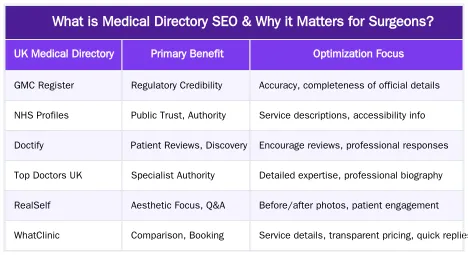
For UK plastic surgeons, prioritizing specific medical directories is essential for maximizing impact on local rankings and patient acquisition. Each platform offers unique benefits, from regulatory credibility to patient review aggregation, contributing to a comprehensive online presence. Strategic optimization on these platforms ensures that a practice reaches its target audience effectively.
Focusing on directories that are highly trusted by both patients and search engines in the UK market is critical. These platforms often serve as primary sources of information for individuals seeking specialized medical care. Optimizing profiles on these sites involves more than just listing basic details; it requires a deep understanding of each platform’s unique features and how to leverage them for visibility and patient engagement.
Key Directories and Optimization Strategies for UK Plastic Surgeons
Optimizing for the following UK medical directories is crucial for plastic surgeons:
- GMC Register: The official register for medical practitioners in the UK. While not a patient booking platform, a complete and accurate entry here is a fundamental trust signal for both patients and search engines.
- NHS Profiles: For practices that offer NHS services, a well-maintained profile on NHS Choices or similar platforms provides a high-authority link and reinforces credibility.
- Doctify: A prominent UK-based platform for patient reviews and doctor discovery. Optimizing here involves encouraging patient feedback and responding professionally to reviews.
- Top Doctors UK: Features highly-rated specialists. Inclusion and a detailed profile here can significantly boost perceived authority.
- RealSelf: A global platform with a strong presence in the UK, particularly for aesthetic procedures. Engaging with patient questions and showcasing before-and-after galleries are key.
- WhatClinic: Allows patients to compare clinics and book appointments. Detailed service listings, transparent pricing (where appropriate), and quick responses to inquiries are vital.
Each of these platforms requires a tailored approach to profile optimization, focusing on complete information, high-quality images, and active engagement with patient feedback. This multi-platform strategy ensures comprehensive coverage and maximizes opportunities for patient bookings.
Leveraging Ruxi Data for Enhanced Clinical Directory Listings
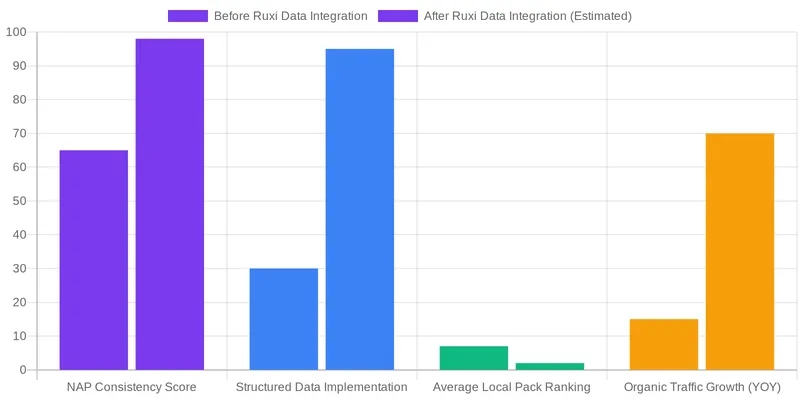
The strategic application of advanced infrastructure, such as Ruxi Data, transforms how medical clinics approach clinical directory listings. Ruxi Data is designed to automate the creation of topical maps and Entity-Attribute-Value (EAV) modeling, ensuring that every piece of information about a medical practice is structured and interconnected. This automation is crucial for maintaining consistency across a vast number of directories and for continuously refining the semantic profile of a healthcare provider.
For plastic surgeons and aesthetic clinics, Ruxi Data facilitates the precise mapping of surgical procedures, physician expertise, and clinic locations into a coherent digital entity. This level of detail and consistency significantly reduces the search engine’s Cost of Retrieval (CoR). When search engines can quickly and accurately understand who a surgeon is, what procedures they offer, and where they practice, they are more likely to rank that surgeon higher for relevant patient queries.
The infrastructure provided by Ruxi Data allows for the dynamic generation and updating of structured data across all relevant clinical directory listings. This ensures that as a practice evolves, its online representation remains current and optimized. This proactive approach to entity management is a key differentiator, moving beyond static listings to a dynamic, data-driven strategy that continuously builds topical authority and enhances search engine trust.
Best Practices for Optimizing Doctor Profiles and Listings
Effective optimization of doctor profiles and clinical directory listings requires a systematic approach. The goal is to present a comprehensive, accurate, and engaging representation of the medical professional and their practice. This involves several key steps that go beyond merely filling out basic fields.
Firstly, ensure every field in a directory profile is completed with detailed and relevant information. This includes specialties, accepted insurance, operating hours, and patient booking systems. High-quality professional images of the doctor and the clinic environment build trust and professionalism. Secondly, actively manage and encourage patient reviews. Positive reviews are powerful social proof, while thoughtful responses to all feedback demonstrate patient care and professionalism. Resources like BrightLocal’s guide on local citations offer further insights into managing online presence.
Thirdly, maintain consistent messaging across all platforms. The tone, values, and unique selling propositions of the practice should be uniform. This consistency reinforces brand identity and helps patients recognize the practice across different directories. Finally, regularly audit all listings for accuracy and completeness. Information can become outdated, and new features may become available on platforms. A proactive approach to listing management ensures that a practice always presents its best face online, directly supporting patient acquisition efforts.
Measuring Impact and Driving Patient Bookings
To understand the effectiveness of medical directory SEO, it is crucial to track key performance indicators (KPIs). Measuring the impact allows practices to refine their strategies and demonstrate a clear return on investment. The primary objective is to translate improved online visibility into tangible patient bookings.
Key metrics to monitor include local search rankings for relevant keywords, website traffic originating from directory listings, and direct inquiries or appointment requests attributed to specific directories. Integration with patient booking systems can provide direct data on conversion rates from directory profiles. Tools like Google Analytics and Google Business Profile insights offer valuable data on how patients interact with listings.
By consistently monitoring these metrics, medical practices can identify which directories are most effective, which optimization strategies yield the best results, and where further improvements are needed. This data-driven approach ensures that efforts in clinical directory optimization directly contribute to the practice’s growth and patient acquisition goals, making the investment in medical directory optimization a strategic asset.
Conclusion
Effective medical directory SEO, driven by sophisticated entity optimization, is no longer an optional add-on but a fundamental requirement for healthcare providers in 2026. By ensuring consistent, structured, and semantically rich information across all online platforms, medical practices can significantly enhance their visibility, build topical authority, and ultimately drive more patient bookings. This strategic approach, particularly vital for specialized sectors like aesthetic surgery in competitive markets, leverages advanced techniques to reduce search engine Cost of Retrieval and establish a dominant online presence. For London-based clinics seeking to elevate their digital strategy and secure a leading position in their niche, specialized expertise in semantic SEO and entity architecture is invaluable. Discover how a tailored semantic SEO strategy can transform your practice’s online authority and patient acquisition. Book a Semantic SEO Audit today.
Frequently Asked Questions
What is medical directory seo and why is it crucial for patient bookings?
Medical directory SEO involves optimizing your practice’s presence across various online medical directories and listings. It ensures consistent, accurate, and comprehensive information, which search engines use to build trust and authority for your practice. This strategic optimization directly impacts your visibility in local search results, making it easier for potential patients to find and book appointments with you.
How does entity optimization enhance patient booking rates through directory listings?
Entity optimization ensures that all information about a medical professional or practice is consistent and accurate across every online platform. This consistency builds strong trust signals for search engines, significantly improving local search rankings. Consequently, patients are more likely to book with doctors who have complete, verified, and easily accessible directory profiles, as studies indicate.
Which UK medical directories should plastic surgeons prioritize for effective medical directory seo?
UK plastic surgeons should prioritize listings on the GMC register, NHS profiles, Doctify, and Top Doctors UK. Additionally, specialized aesthetic directories like RealSelf and WhatClinic are crucial for reaching specific patient demographics. Optimizing these platforms is key for robust medical directory SEO, as each contributes unique trust signals and patient reach.
What type of schema markup is vital for optimizing medical directory listings?
Implementing Physician, MedicalBusiness, and LocalBusiness schema markup is vital for medical directory listings. These structured data types help search engines understand the specific nature of your practice and services. Including properties like `sameAs` linking to official profiles, GMC numbers, specialties, and procedure types maximizes entity recognition and visibility.
How quickly can one expect to see results from medical directory seo efforts?
Ranking improvements from medical directory SEO typically become visible within 4-8 weeks, with the full effects of entity consolidation taking 3-6 months. Increases in patient bookings often follow these ranking improvements, usually within 2-3 weeks. Consistent monitoring and updates are essential for sustained performance.
Why is professional management of medical directory listings often recommended?
Professional management ensures meticulous consistency of NAP (Name, Address, Phone) data across all listings, which is critical for entity authority. Experts also monitor patient reviews, respond appropriately, and maintain complex schema markup, preventing conflicting information that can harm your online reputation and search engine trust. This specialized oversight frees up practitioners to focus on patient care.
Ruxi Data brings together multi-model AI, automated website crawling, live indexation checks, topical authority mapping, E-E-A-T enrichment, schema generation, and full pipeline automation — from crawl to WordPress publish to social posting — all in one platform built for agencies and freelancers who run on results.