
Patient Intent Mapping: Aligning Content for Aesthetic Clinics
Patient intent mapping is a strategic semantic SEO approach for aesthetic clinics, precisely aligning content with patient search intent across the entire journey. This methodology deciphers underlying patient needs—whether informational, commercial investigation, or transactional—beyond simple keywords. By understanding query networks and evolving search intent, clinics can create highly relevant content that addresses specific patient questions and guides them from awareness to booking. This ensures maximum visibility and conversion rates within the competitive aesthetic medicine market.
Abdurrahman Şimşek, a Semantic SEO Strategist, specializes in developing intent-driven content strategies for medical and aesthetic businesses. His expertise focuses on leveraging advanced semantic analysis to enhance online visibility and patient engagement.
To explore your options, contact us to schedule your consultation. You can also reach us via: Book a Semantic SEO Audit, Direct WhatsApp Strategy Line: +90 506 206 86 86, Hire as Semantic SEO Architect
In the competitive landscape of aesthetic medicine, understanding what your potential patients are truly searching for is paramount. Patient intent mapping offers a strategic semantic SEO approach for aesthetic clinics to align their content with every stage of the patient journey, ensuring visibility and conversions. This methodology moves beyond simple keywords to decipher the underlying needs and goals of individuals seeking aesthetic treatments. By precisely addressing these intents, clinics can build robust online presences that resonate with their target audience, ultimately driving engagement and appointments. This article explores how aesthetic clinics can leverage this powerful strategy.
What is Patient Intent Mapping for Aesthetic Clinics?
Patient intent mapping is the process of identifying and categorizing the underlying goals and needs behind a patient’s search queries. For aesthetic clinics, this means understanding whether a user is seeking basic information, comparing treatment options, or ready to book a consultation. This approach moves beyond surface-level keywords to grasp the true semantic meaning of a search, allowing clinics to create highly relevant content.
There are three core types of search intent relevant to aesthetic medicine:
- Informational Intent: The patient seeks knowledge or answers to specific questions. Examples include “what is Botox?”, “how long do lip fillers last?”, or “side effects of rhinoplasty.”
- Commercial Investigation Intent: The patient is researching solutions or comparing different aesthetic treatments and providers. Queries might be “best lip fillers London,” “Botox vs. dermal fillers,” or “rhinoplasty cost UK.”
- Transactional Intent: The patient is ready to take a specific action, such as making a purchase or booking a service. Examples include “book rhinoplasty consultation,” “dermal filler clinic near me,” or “Botox appointment Harley Street.”
Understanding the Patient Journey & Query Networks
The patient journey in aesthetic medicine typically progresses through stages: awareness, consideration, and decision. At each stage, patient intent evolves. An individual in the awareness stage might have informational intent, searching for general facts about a procedure. As they move to consideration, their intent shifts to commercial investigation, comparing clinics and treatment specifics. Finally, at the decision stage, transactional intent drives searches for booking appointments.
Query networks visualize the interconnectedness of these searches. They illustrate how a patient’s initial broad query can lead to more specific, intent-driven searches. Mapping these networks helps clinics anticipate patient needs at every touchpoint, ensuring a seamless information flow and guiding them towards conversion. Understanding these pathways is crucial for developing a comprehensive content strategy.
Why Semantic SEO Demands Intent-Driven Content?
Traditional keyword research, which often focuses on high-volume, exact-match terms, is no longer sufficient for modern SEO, especially in Your Money Your Life (YMYL) sectors like aesthetic medicine. Search engines have evolved to understand the semantic meaning behind queries, not just the keywords themselves. This shift means that content must address the underlying user intent to rank effectively. Semantic SEO prioritizes understanding entities, their relationships, and the context of a search.
For aesthetic clinics, this means moving beyond simply having a page for “Botox” to creating content that answers every possible question and need related to Botox, from its mechanism of action to post-procedure care and cost. By aligning content with diverse patient intents, clinics build robust topical authority. This authority signals to search engines that the clinic is a comprehensive and trustworthy source of information, which is critical for medical content. Search engines prioritize content that genuinely satisfies user intent, leading to higher rankings and better user experience.
From Keywords to Entities: Decoding Medical Search Intent
The transition from keywords to entities is fundamental to modern search. An entity is a distinct, well-defined concept or thing, such as “Botox,” “rhinoplasty,” or “dermal fillers.” Search engines now understand these entities and their attributes (e.g., “Botox” has attributes like “active ingredient: botulinum toxin,” “purpose: wrinkle reduction,” “duration: 3-6 months”). Decoding medical search intent involves identifying the core entities a patient is searching for and understanding the specific attributes or relationships they are interested in. This allows for the creation of content that is semantically rich and directly answers complex patient queries.
For example, a search for “Botox cost London” isn’t just about the keywords; it’s about the entity “Botox,” the attribute “cost,” and the location entity “London.” Effective semantic SEO ensures that content not only mentions these terms but also provides structured, authoritative information about them. This deep understanding of intent and entities is crucial for establishing a clinic’s expertise and trustworthiness in the medical field. For further insights into deconstructing search intent, explore deconstructing SERP intent.
Methodology: How to Perform Patient Intent Mapping
Performing effective patient intent mapping involves a systematic approach that combines data analysis with a deep understanding of the aesthetic patient journey. The process begins with comprehensive medical keyword research, but quickly expands to semantic analysis. Here’s a step-by-step methodology:
- Initial Keyword Research & Query Collection: Start by gathering a broad list of keywords related to your clinic’s services. Use tools like Google Keyword Planner, Semrush, or Ahrefs to identify high-volume and long-tail queries. Include questions, comparisons, and location-specific searches.
- Categorize Search Intent: For each query, manually or semi-automatically assign an intent type: informational, commercial investigation, or transactional. Look for intent modifiers like “what is,” “best,” “cost,” “reviews,” “book,” or “near me.”
- Analyze SERP Features: Examine the Search Engine Results Pages (SERPs) for top-ranking queries. Observe the types of content ranking (e.g., blog posts, service pages, comparison articles, local listings). This reveals how search engines interpret intent for specific queries.
- Identify Entities and Attributes: Extract key entities (e.g., “dermal fillers,” “rhinoplasty,” “Dr. Smith”) and their associated attributes (e.g., “cost,” “benefits,” “recovery time,” “clinic location”) from your query list. This forms the basis for semantic content.
- Map to Patient Journey Stages: Align categorized intents with the awareness, consideration, and decision stages of the aesthetic patient journey. This helps visualize content gaps and opportunities.
- Develop Content Clusters: Group related queries and entities into topical clusters. Each cluster should address a specific overarching topic comprehensively, with pillar pages and supporting articles. For a detailed workflow, refer to topic cluster strategy workflow.
Leveraging Advanced Tools for Query Analysis
Manual intent analysis can be time-consuming. Advanced tools and platforms are essential for scaling this process. These tools can help identify query networks, analyze SERP features at scale, and even suggest entity relationships. For example, some platforms use natural language processing (NLP) to infer intent from large datasets of search queries. Integrating these tools allows for more efficient and accurate intent categorization, ensuring that content strategies are built on robust data. This automation is particularly valuable for complex medical niches where query variations are extensive.
Optimizing for E-E-A-T with Intent-Aligned Content
For YMYL (Your Money Your Life) sectors like aesthetic medicine, Google’s E-E-A-T guidelines (Experience, Expertise, Authoritativeness, Trustworthiness) are paramount. Content that aligns with patient intent inherently supports E-E-A-T. When a clinic consistently provides accurate, comprehensive, and relevant answers to patient queries at every stage of their journey, it demonstrates expertise and authority. Abdurrahman Şimşek, with over 10 years of experience in search engineering and specialization in medical SEO for London clinics, emphasizes that a holistic SEO strategy must prioritize E-E-A-T. This involves not only creating high-quality content but also structuring it semantically to be easily understood by search engines and users alike.
By understanding the specific intent behind a query, clinics can ensure that the content delivered is not only factual but also presented in a way that builds trust. For instance, a patient searching for “rhinoplasty risks” has a high informational intent with a need for trustworthy, expert-backed medical advice. Providing content authored by qualified surgeons, citing reputable medical sources, and presenting balanced information directly addresses this intent and reinforces E-E-A-T. This approach is crucial for achieving dominance in the competitive London medical market, as establishing E-E-A-T is a prerequisite for ranking for sensitive medical queries. For more on building E-E-A-T for London aesthetic clinics, see Harley Street SEO strategy.
Building Topical Authority for London Aesthetic Clinics
Topical authority is the depth and breadth of a website’s coverage on a specific subject, signaling to search engines that it is a leading expert in that domain. For London aesthetic clinics, building topical authority means creating a comprehensive content network around every procedure they offer. This includes informational articles, comparison guides, patient testimonials, and detailed service pages, all interlinked to demonstrate expertise. By meticulously mapping patient intent, clinics can identify all related sub-topics and questions, ensuring no relevant query goes unanswered. This comprehensive approach not only improves search visibility but also positions the clinic as a trusted resource for potential patients. Analyzing competitors to build topical authority is vital for effectively building topical authority. For competitive intelligence, refer to live competitor analysis.
Ruxi Data: Automating Patient Intent Analysis & CoR Optimization
The scale and complexity of patient intent analysis for a comprehensive aesthetic clinic can be significant. This is where advanced semantic SEO infrastructure like Ruxi Data becomes invaluable. Ruxi Data automates the analysis of complex query networks and Entity-Attribute-Value (EAV) modeling. It transforms raw clinical expertise into structured data, allowing for the efficient identification and categorization of patient intents. This automation significantly reduces the manual effort required for content mapping and ensures a more precise alignment between content and searcher needs.
A key benefit of leveraging Ruxi Data is its ability to optimize the Cost of Retrieval (CoR) for search engines. By providing highly structured, intent-aligned content, Ruxi Data helps search engines more efficiently understand and index a clinic’s website. This reduces the computational resources search engines need to process and rank content, potentially leading to better visibility. Ruxi Data provides the automated infrastructure to execute and scale medical SEO strategies. To learn more about automating medical SEO with Ruxi Data, visit internal linking automation with Ruxi Data. Furthermore, Ruxi Data’s automation capabilities are key to optimizing CoR by streamlining content processing. For insights into reducing Cost of Retrieval with Ruxi Data, explore crawl budget optimization workflow.
Transforming Clinical Expertise into Structured Data
Clinical expertise is a clinic’s most valuable asset. Ruxi Data facilitates the transformation of this expertise into structured data that search engines can easily interpret. This involves creating detailed EAV models for medical procedures, conditions, and treatments. For example, a “rhinoplasty” procedure can be modeled with attributes like “type,” “recovery time,” “cost range,” “surgeon qualifications,” and “patient testimonials.” This structured approach ensures that every piece of information is categorized and linked, making it highly discoverable. This process is crucial for establishing a strong E-E-A-T foundation and for applying semantic architecture to medical SEO. For more on semantic architecture, visit plastic surgery SEO London.
Integrating Intent Mapping into Your Content Strategy
Once patient intent mapping is complete, the insights gained must be integrated into the clinic’s overall content strategy. This means moving beyond a simple list of keywords to a comprehensive content plan that addresses every identified intent. The goal is to create a semantic content network where each piece of content serves a specific purpose within the patient journey. This involves developing pillar pages for broad topics and supporting cluster content for more specific queries.
For example, a pillar page on “Dermal Fillers” would cover the overarching topic. Supporting articles, each addressing a specific intent, could include “What are the different types of dermal fillers?” (informational), “Comparing lip fillers in London” (commercial investigation), and “How to prepare for a dermal filler appointment” (transactional). This structured approach ensures that the clinic’s website provides a complete and authoritative resource, guiding patients seamlessly from initial curiosity to booking a procedure. This also involves implementing advanced schema for entity modeling. For more on advanced schema, see medical schema for surgeons.
Crafting Content for Every Stage of the Aesthetic Patient Journey
Effective content strategy for aesthetic clinics requires tailoring content to each stage of the patient journey:
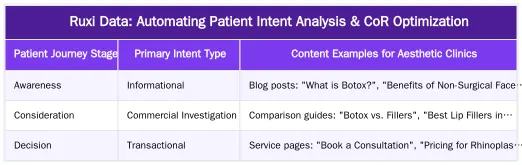
By systematically creating content for each stage, clinics can capture patients at various points in their decision-making process. This ensures that the website is always providing value, regardless of how far along a patient is in their journey. This comprehensive content architecture not only improves SEO performance but also enhances the overall patient experience, building trust and fostering conversions. For more on keyword research for SaaS, which shares principles applicable to medical keyword research, visit keyword research for SaaS.
Achieving London Aesthetic Market Dominance Through Intent
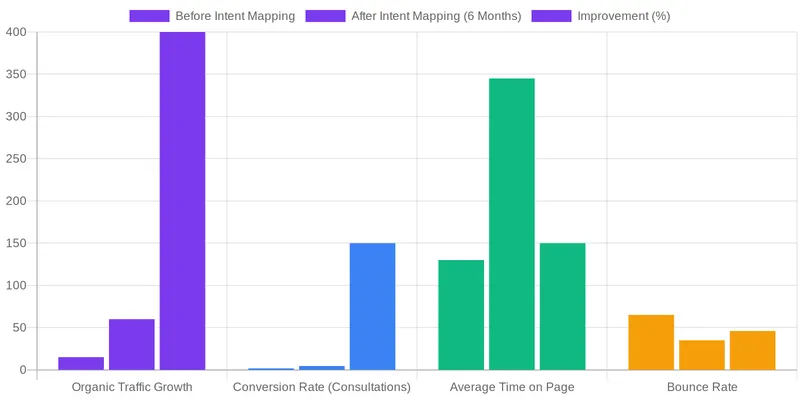
In the highly competitive London aesthetic market, achieving dominance requires more than just a strong online presence; it demands a strategic, intent-driven approach. By mastering patient intent mapping, aesthetic clinics can precisely target their ideal patients, delivering content that directly addresses their needs and concerns. This semantic SEO approach ensures that the clinic’s website ranks prominently for a wide array of relevant queries, from initial research to direct booking. This specialized SEO for London plastic surgeons is a specific application of broader medical SEO strategies. This leads to increased organic traffic, higher conversion rates, and ultimately, a stronger market position. Abdurrahman Şimşek specializes in building high-authority Semantic Content Networks specifically for medical clinics, skin clinics, and plastic surgeons in London. To discuss how patient intent mapping can transform your clinic’s digital strategy and help you achieve market leadership, contact us today.
Conclusion
Patient intent mapping is a fundamental component of a successful semantic SEO strategy for aesthetic clinics. By understanding and addressing the diverse needs and goals behind patient search queries, clinics can create highly relevant, authoritative content that resonates with their target audience. This approach not only improves search engine visibility and E-E-A-T but also streamlines the patient journey, leading to increased engagement and conversions. Leveraging advanced tools and a structured methodology allows clinics to build dominant topical authority, especially in competitive markets like London. Embrace patient intent mapping to transform your digital presence and secure your clinic’s position as a trusted leader in aesthetic medicine.
Book a Semantic SEO Audit to discover how your clinic can benefit. You can also reach out directly via WhatsApp Strategy Line: +90 506 206 86 86, or Hire as Semantic SEO Architect to build your clinic’s dominant online presence.
Frequently Asked Questions
How does Ruxi Data assist with patient intent mapping?
Ruxi Data analyzes vast SERP datasets to model the complex query networks patients use during their aesthetic journey. It precisely identifies the informational, commercial, and transactional queries related to specific procedures. This allows us to build a comprehensive content structure that meets patient needs at every stage, from initial research to booking an appointment.
Can you provide an example of patient intent mapping for a procedure like rhinoplasty?
Certainly. For rhinoplasty, we map informational queries like ‘what is rhinoplasty recovery like’ or ‘non-surgical nose job options’. We also identify commercial investigations such as ‘best rhinoplasty surgeon in London’ and transactional queries like ‘rhinoplasty consultation cost’. We then create specific, authoritative content to answer each of these distinct intents, guiding the patient effectively.
How does this approach improve conversion rates for an aesthetic clinic?
By aligning content with specific patient intent, we provide the right information at the precise moment a prospective patient needs it. This strategic alignment builds trust and establishes the clinic’s authority, guiding individuals from initial research to booking a consultation. This significantly improves conversion rates compared to generic content strategies.
Is patient intent mapping a one-time process for aesthetic clinics?
No, it is an ongoing and dynamic process. Patient language and search behavior continuously evolve, influenced by new trends and information. Therefore, we continuously monitor query data and SERP trends to refine the content network and ensure it remains aligned with current patient intent, maintaining optimal performance.
How does patient intent mapping connect to building topical authority?
Topical authority is achieved by comprehensively covering a subject area, demonstrating deep expertise. Patient intent mapping provides the essential blueprint for this coverage, ensuring we create a complete semantic network of content. This addresses every conceivable question a patient might have about a procedure, establishing the clinic as a definitive resource.
How can I get started with a semantic SEO strategy for my aesthetic clinic?
You can begin by booking a Semantic SEO Audit with Abdurrahman Şimşek to assess your current online presence and identify growth opportunities. Alternatively, you can reach out directly via the WhatsApp Strategy Line at +90 506 206 86 86 for a direct consultation. Our team is ready to help your clinic achieve market dominance.
Ruxi Data brings together multi-model AI, automated website crawling, live indexation checks, topical authority mapping, E-E-A-T enrichment, schema generation, and full pipeline automation — from crawl to WordPress publish to social posting — all in one platform built for agencies and freelancers who run on results.