Google Ads No Conversions: Optimizing Patient Acquisition
Addressing google ads no conversions is crucial for medical clinics seeking to transform clicks into patient appointments. This article details common reasons for high click-through rates without conversions, including ad-to-landing page mismatches, irrelevant traffic from poor targeting, and suboptimal landing page design. It outlines strategies for conversion rate optimization, emphasizing the importance of precise ad copy, effective negative keywords, and a seamless user experience to improve patient acquisition and reduce cost per lead.
Abdurrahman Şimşek, a Semantic SEO Strategist, specializes in optimizing digital strategies for medical clinics. His expertise in semantic content networks and holistic SEO ensures improved patient acquisition and PPC performance for healthcare providers.
To explore your options, contact us to schedule your consultation.
If your Google Ads generate clicks but fail to convert them into patients, it indicates a critical disconnect. When you have google ads no conversions despite high click-through rates, underlying issues prevent potential patients from taking the next step. This article audits the reasons why Google Ads get clicks but no conversions and provides strategies to transform those clicks into patient consultations.
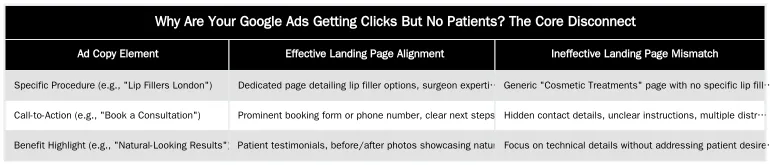
Why Are Your Google Ads Getting Clicks But No Patients? The Core Disconnect
When Google Ads for medical clinics generate clicks but few patient conversions, the issue is often a disconnect between the ad’s promise and the user’s experience. This mismatch creates friction, causing potential patients to abandon the process before booking an appointment.
The Ad-to-Landing Page Mismatch: A Critical Breakdown
A primary reason for high clicks but low conversions is a mismatch between your ad copy, keywords, and landing page content. If a patient clicks an ad for “Harley Street cosmetic injectables” but lands on a generic clinic homepage, they perceive a disconnect. This inconsistency erodes trust and relevance, causing users to bounce. An effective landing page fulfills the expectation set by the ad with relevant information and a clear path to conversion.
A poor quality score in Google Ads often stems from this mismatch. Google assesses the relevance of your ad to its landing page, which impacts your ad’s visibility and cost.
Beyond the Click: Common Conversion Killers for Medical Clinics
For medical clinics, many factors can sabotage the conversion process after the click. Identifying these “conversion killers” is necessary to refine your paid advertising and improve patient acquisition.
Is Your Landing Page Driving Patients Away?
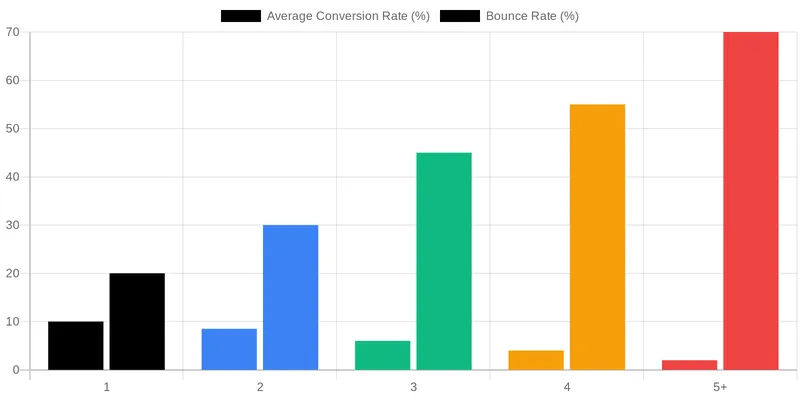
Common landing page issues include slow load times, which increase bounce rates. A confusing layout, poor navigation, or an unclear value proposition for the advertised procedure can deter patients. Many clinics overlook mobile unresponsiveness, though most users browse on smartphones. A page not optimized for mobile creates a poor user experience, impacting conversion rates for ppc for surgeons and other medical specialties.
Are Your Ads Reaching the Right Patients?
A landing page cannot convert irrelevant traffic. Poor audience targeting leads to unqualified clicks. This includes insufficient use of negative keywords, which stops ads from showing for irrelevant searches (e.g., “free consultations” if you offer paid services). Broad demographic or imprecise geographic targeting can waste ad spend on users unlikely to become patients.
Optimizing for Patient Conversions: A Strategic Audit Framework
Transforming clicks into patient consultations requires a systematic audit. This framework refines every touchpoint from the ad impression to the final booking to create a trustworthy patient journey.
Crafting Compelling Ad Copy and Offers
Effective ad copy sets clear expectations and uses strong calls-to-action (CTAs). For medical clinics, highlight specific procedures, benefits, and practitioner expertise. Use language that resonates with the patient’s needs. Clearly state the offer, whether it’s a consultation, treatment, or download. This precision improves ad quality score and attracts qualified clicks.
Enhancing User Experience and Trust Signals
A high-converting landing page requires fast load times, intuitive navigation, and mobile responsiveness. Display clear CTAs to make booking or inquiring easy. For medical practices, incorporate trust elements: doctor credentials, patient testimonials, before-and-after galleries, and affiliations with medical bodies. These signals build confidence, which is paramount in healthcare decisions.
The Semantic Advantage: How Holistic SEO Boosts PPC Performance for Clinics
Google Ads’ long-term effectiveness for medical clinics is amplified when integrated with a holistic semantic SEO strategy. This approach builds an online presence that enhances trust and authority, impacting paid campaign performance. Abdurrahman Şimşek specializes in these strategies for London’s private healthcare market, including Harley Street clinics, because a strong organic foundation makes paid efforts more efficient.
Building E-E-A-T for Unshakeable Patient Trust
In the YMYL (Your Money Your Life) sector, demonstrating Expertise, Experience, Authoritativeness, and Trustworthiness (E-E-A-T) is non-negotiable. A digital strategy should ensure your clinic’s E-E-A-T signals are strong across your website, social media, and ad creatives. When potential patients perceive your clinic as a trusted authority, they are more likely to convert from an ad. This trust is built through medically accurate content, clear doctor bios, patient reviews, and a consistent brand message. Learn more about building a semantic content network.
Integrating PPC with a Semantic Content Network
A semantic content network provides an ideal landing environment for PPC campaigns. Ads can direct users to relevant, authoritative content that addresses their search intent, rather than to generic pages. This improves landing page relevance, quality score, and topical authority. For instance, an ad for “rhinoplasty surgeon London” can lead to a detailed article on rhinoplasty showcasing surgeon expertise and patient success stories. Understanding SERP intent is crucial for this alignment. Google Search Central provides insights into creating helpful content.
Measuring Success: Key Metrics for Patient Acquisition
To understand Google Ads effectiveness, clinics must look beyond clicks and impressions. Focusing on key performance indicators (KPIs) for patient acquisition clarifies return on investment and helps optimize campaigns for profitability. Effective lead tracking is the foundation for this measurement.
Understanding Your Patient Acquisition Cost (PAC)
Patient Acquisition Cost (PAC) is a critical metric for medical clinics, representing the total cost to acquire one new patient. To calculate PAC, divide the total marketing spend (ad costs, agency fees, overhead) by the number of new patients acquired in a period. For example, if you spend £1,000 on Google Ads and acquire 10 new patients, your PAC is £100. Monitoring PAC helps evaluate campaign profitability and guides budget allocation. A lower PAC indicates more efficient patient acquisition. WordStream’s PPC benchmarks offer comparative data.
Implementing Robust Lead Tracking Systems
Accurate lead tracking is indispensable for optimizing campaigns. Set up conversion tracking in Google Ads and Google Analytics. Key conversion points for clinics include call tracking, form submissions, and online appointment bookings. Tracking these actions lets you attribute conversions to specific ads, keywords, and campaigns. This data allows you to refine targeting, ad copy, and landing pages to improve your cost per lead and patient acquisition efficiency.
Ready to Transform Clicks into Consultations?
Abdurrahman Şimşek offers expert semantic SEO and web development services tailored for London’s private healthcare sector, including plastic surgeons and aesthetic clinics.
Leverage over a decade of experience in building high-converting digital presences and dominating local organic search. A holistic strategy can enhance your Google Ads performance and deliver a consistent flow of high-value patients.
Contact Abdurrahman Şimşek today to discuss your clinic’s conversion challenges.
Conclusion
Optimizing ad copy, landing page experiences, targeting, and integrating with a semantic SEO strategy are crucial for patient acquisition. By focusing on relevance, user experience, and building E-E-A-T, medical clinics can improve their paid advertising. Implementing precise lead tracking and understanding metrics like Patient Acquisition Cost ensures marketing funds are invested wisely, leading to more booked appointments.
Frequently Asked Questions
Why do my Google Ads get clicks but no patients, leading to google ads no conversions?
The primary reason for google ads no conversions despite high clicks is often a significant disconnect between the ad’s promise and the landing page experience. Potential patients might click expecting one thing and find a different message, slow loading times, or unclear next steps on your site. This mismatch creates friction, causing them to abandon the process before booking a consultation.
What are the common reasons for google ads no conversions in medical clinics?
Common reasons for google ads no conversions include irrelevant landing page content, poor mobile optimization, and a lack of clear, compelling calls-to-action. Additionally, a weak value proposition, insufficient trust signals, or targeting the wrong audience can lead to clicks that don’t translate into patient appointments. Addressing these issues is crucial for improving your campaign’s effectiveness.
How can I diagnose why my google ads no conversions for patient bookings?
To diagnose why your google ads no conversions, start by auditing your landing page relevance, speed, and user experience. Check your Google Ads conversion tracking setup to ensure it’s accurate, and analyze your search terms report for irrelevant clicks. Review your ad copy and calls-to-action to ensure they align perfectly with your target audience’s intent and expectations.
How important is mobile speed for converting ad clicks into patient appointments?
Mobile speed is critically important for converting ad clicks into patient appointments, especially for local medical clinics. The majority of users searching for healthcare services are on mobile devices, and a page that takes more than three seconds to load will experience a very high bounce rate. This directly wastes your ad spend and prevents potential patients from engaging with your clinic.
What kind of Call-to-Action (CTA) is most effective for medical clinics?
<p
Ruxi Data brings together multi-model AI, automated website crawling, live indexation checks, topical authority mapping, E-E-A-T enrichment, schema generation, and full pipeline automation — from crawl to WordPress publish to social posting — all in one platform built for agencies and freelancers who run on results.