
Dynamic Schema Generation: Boosting SERP Visibility With AI
Dynamic schema generation, powered by artificial intelligence, revolutionizes SEO by creating context-aware structured data in real-time. This advanced approach moves beyond static markup, ensuring your website’s content is perfectly understood by search engines, leading to enhanced visibility and superior rich snippet performance. Readers will learn how AI analyzes content to generate precise JSON-LD, improving SERP features and overall search performance. This guide explores the mechanics, benefits, and practical implementation of dynamic schema generation, demonstrating its impact on modern SEO strategies.
Abdurrahman Şimşek is committed to delivering cutting-edge SEO solutions. Our expertise ensures accurate, ethical, and results-driven strategies for structured data implementation. We prioritize quality and measurable outcomes, helping businesses achieve superior search engine visibility and performance through advanced techniques.
To explore your options, contact us to schedule your consultation.
Dynamic schema generation, powered by artificial intelligence, is revolutionizing SEO by creating context-aware structured data in real-time. This advanced approach moves beyond static markup, ensuring your website’s content is perfectly understood by search engines, leading to enhanced visibility and superior rich snippet performance. This guide will explore the mechanics, benefits, and practical implementation of dynamic schema generation, demonstrating how it can significantly elevate your search presence in 2026 and beyond.
What is Dynamic Schema Generation and Why it Matters for SEO?
Dynamic schema generation is the automated process of creating and deploying structured data (like JSON-LD) that adapts in real-time to the specific content and context of a webpage. Unlike static, manually coded schema, dynamic schema leverages artificial intelligence to analyze content, identify key entities, and generate perfectly matched, context-aware markup. This precision is crucial for modern SEO, enabling search engines to deeply understand your content, qualify it for rich snippets, and enhance overall search visibility.
The significance of dynamic schema generation for SEO cannot be overstated. In an increasingly competitive digital landscape, rich snippets and other SERP features are vital for standing out. By providing search engines with highly accurate and relevant structured data, websites can unlock these coveted visual enhancements, such as star ratings, product prices, event dates, and FAQ toggles. This not only improves click-through rates but also signals to search engines that your content is well-organized and authoritative, contributing positively to rankings. As search algorithms become more sophisticated, the ability to deliver context-aware structured data automatically becomes a fundamental pillar of a robust SEO strategy.
How AI Powers Context-Aware Schema Markup in Real-Time
Artificial intelligence is the engine behind truly context-aware structured data, transforming the laborious manual process into an efficient, scalable operation. AI algorithms analyze vast amounts of textual and visual content on a webpage, identifying patterns, entities, and relationships that human eyes might miss. This deep understanding allows for the creation of JSON-LD, Microdata, or RDFa that precisely reflects the page’s purpose and content, moving beyond generic schema types to highly specific and nuanced representations.
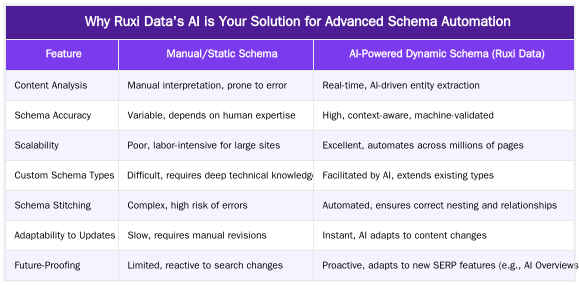
The advantages over manual or static methods are profound. AI eliminates human error, ensures consistency across large websites, and can adapt to content updates instantly. This capability is particularly valuable for complex websites with frequently changing content, such as e-commerce platforms, news sites, or SaaS documentation portals. Furthermore, AI can handle the intricacies of custom schema types and advanced techniques like schema stitching, which are often too complex for manual implementation.
Real-time Content Analysis and Entity Extraction
The core of AI-powered dynamic schema generation lies in its ability to perform real-time content analysis. AI models, often utilizing natural language processing (NLP) and machine learning, scan a webpage’s text, images, and other elements. They identify key data points such as the author, publication date, product price, availability, customer reviews, business address, and event details. This process, known as entity extraction, maps these identified entities to the appropriate properties within Schema.org vocabulary. For instance, an AI can differentiate between a “date” referring to an event and a “date” referring to an article’s publication, applying the correct `startDate` or `datePublished` property accordingly. This ensures the generated schema is not just present, but highly accurate and relevant to the specific context.
Beyond Basic Types: Custom Schema and Schema Stitching
While standard Schema.org types cover a wide range of content, many businesses have unique offerings that require more specialized structured data. AI excels at handling these advanced scenarios. It can facilitate the creation of custom schema types by extending existing Schema.org definitions or even proposing new properties based on unique content patterns. For example, a specialized SaaS product might require custom properties to describe its unique features or integration capabilities. Moreover, AI can manage schema stitching, which involves combining multiple schema types on a single page to provide a comprehensive description. A product page, for instance, might require `Product` schema, `Review` schema, `Offer` schema, and `FAQPage` schema all working in harmony. AI ensures these different schema blocks are correctly nested and interconnected, creating a holistic data representation that search engines can fully leverage. Learn more about advanced schema markup for 2026 at abdurrahmansimsek.com/advanced-schema-markup-2026/.
Implementing Dynamic Schema: Tools, Techniques, and Validation
Implementing dynamic schema generation requires a strategic approach, combining robust tools with best practices to ensure accuracy and compliance. While custom API integrations offer the most flexibility for large-scale automation, accessible tools like Google Tag Manager (GTM) provide a powerful and flexible method for injecting dynamic JSON-LD without direct code modifications to the website’s backend. Regardless of the method, rigorous validation is paramount to ensure the structured data is correctly formatted and understood by search engines.
Leveraging Google Tag Manager for Dynamic JSON-LD
Google Tag Manager (GTM) is an incredibly versatile tool for deploying dynamic JSON-LD. By utilizing custom HTML tags and data layer variables, GTM can inject structured data that adapts to the specific page content. For example, you can configure GTM to read product details from a data layer (e.g., product name, price, image URL) and dynamically construct a `Product` schema JSON-LD script. This script is then fired on relevant product pages. This method offers significant flexibility, allowing marketers to manage schema deployment without developer intervention for every change. It’s an efficient way to scale schema implementation across many pages, especially for e-commerce or content-rich sites. For a comprehensive guide, explore abdurrahmansimsek.com/automated-schema-markup-guide/.
Essential Schema Validation and Monitoring
Once dynamic schema is implemented, validation is a critical ongoing process. Tools like Google’s Rich Results Test are indispensable for checking if your structured data is valid and eligible for rich snippets. This tool provides real-time feedback on errors and warnings, helping you debug issues quickly. The Schema.org Validator offers another layer of verification, ensuring your markup adheres to the Schema.org vocabulary. Beyond initial validation, continuous monitoring is essential. Search engines update their guidelines, and website content changes. Regular audits of your schema health, perhaps through automated tools or scheduled checks, ensure that your dynamic schema remains accurate and effective, preventing potential drops in rich snippet visibility or search performance.
The Impact of Dynamic Schema on AI Overviews and Search Performance
As search engines evolve, particularly with the rise of generative AI features like AI Overviews (prominent in 2026), the role of structured data becomes even more critical. Precise, context-aware schema acts as a direct feed to these advanced systems, enabling them to accurately understand, summarize, and present your content. Websites that master dynamic schema generation are better positioned to thrive in this new search landscape, securing prime visibility and driving significant performance gains.
Enhancing Visibility in AI Overviews
AI Overviews, Google’s generative AI summaries at the top of the SERP, rely heavily on understanding the core entities and relationships within content. Well-structured, dynamic data provides a clear, unambiguous signal to these AI models, making it significantly easier for them to extract key information and synthesize accurate answers. When your content is backed by robust, context-aware JSON-LD, it increases the likelihood of your site being cited or featured directly within an AI Overview. This direct exposure can lead to unprecedented levels of brand visibility and authoritative positioning. Investing in advanced schema is, therefore, a direct investment in future-proofing your content for AI-driven search experiences. For insights into Article Schema for AI Overviews in 2026, visit abdurrahmansimsek.com/article-schema-for-ai-overviews-2026/.
Measuring the ROI of Advanced Structured Data
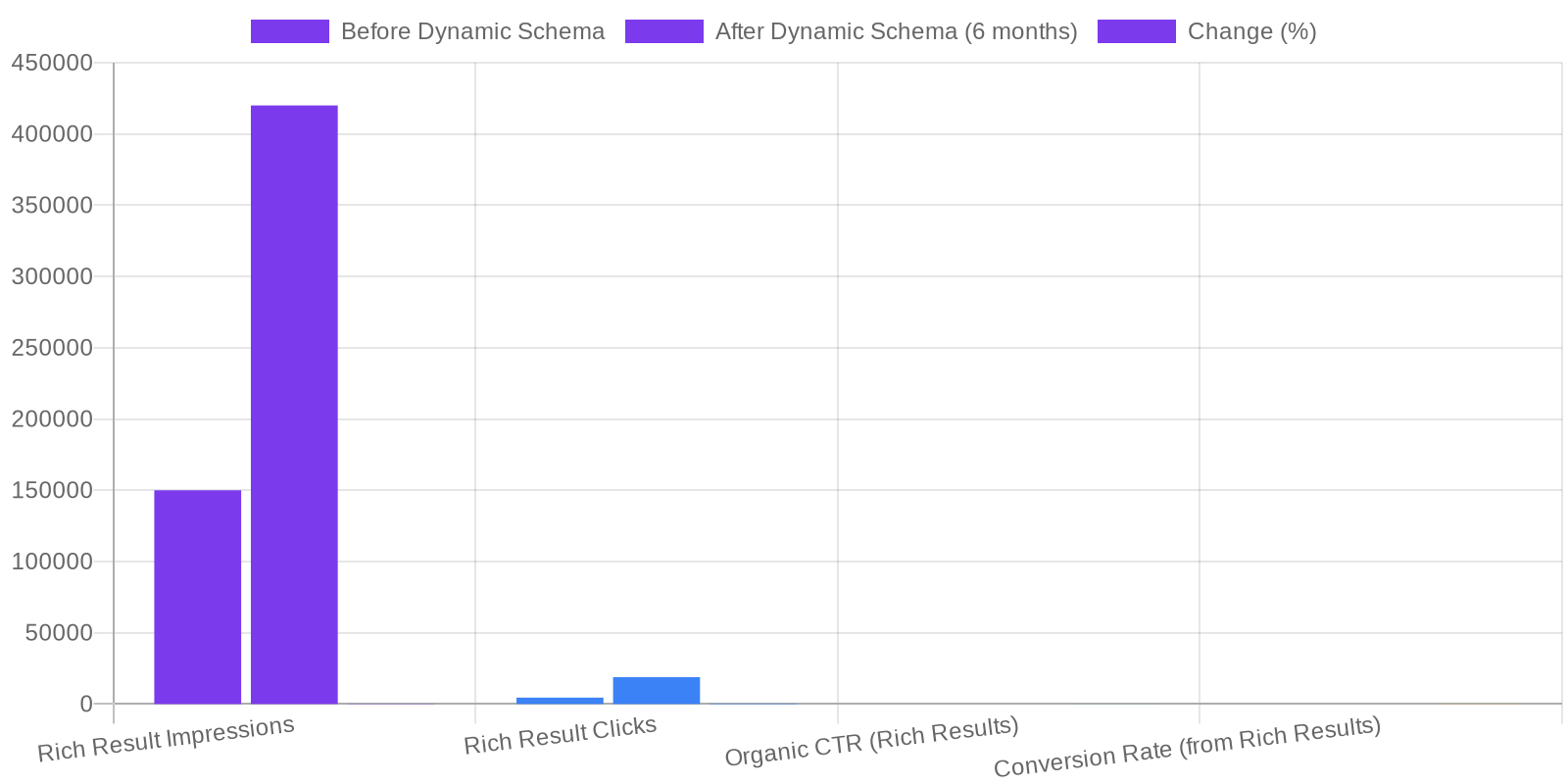
Demonstrating the return on investment (ROI) for advanced structured data, including dynamic schema generation, involves tracking several key metrics. The most direct indicators are increases in rich result impressions and clicks within Google Search Console. Beyond this, monitor organic traffic growth, particularly to pages with newly implemented or optimized dynamic schema. Look for improvements in conversion rates, as rich snippets can attract more qualified traffic. Analyze user engagement metrics like bounce rate and time on page, which can indirectly benefit from users finding highly relevant information quickly. By correlating these metrics with your schema implementation efforts, you can clearly illustrate the tangible value that precise, dynamic structured data brings to your overall digital marketing strategy.
Why Ruxi Data’s AI is Your Solution for Advanced Schema Automation
For businesses seeking to harness the full power of dynamic schema generation, Ruxi Data offers a cutting-edge AI-powered platform designed to automate and optimize structured data at scale. Our solution directly addresses the complexities of modern SEO, providing precise, context-aware JSON-LD that adapts to your content in real-time. Ruxi Data’s expertise in semantic analysis and machine learning ensures that your website consistently delivers the most accurate and comprehensive structured data to search engines, unlocking rich snippets and enhancing visibility across all SERP features, including the crucial AI Overviews of 2026.
Our platform is built on years of experience in structured data and AI, making us a trusted partner for enterprise-level SEO. We understand that manual schema implementation is unsustainable for large, dynamic websites, and our AI is engineered to overcome these challenges, providing a robust and reliable solution. According to Google’s own documentation, structured data is essential for enabling special search result features, and Ruxi Data ensures you meet and exceed these requirements.
Seamless Integration and Scalability for Enterprise Needs
Ruxi Data’s AI platform is engineered for seamless integration into your existing technology stack. Whether you operate on a custom CMS, a popular e-commerce platform, or a complex enterprise system, our API-first approach ensures smooth data flow and deployment. This allows for rapid implementation and minimal disruption to your current operations. Crucially, Ruxi Data is built for scalability, capable of handling millions of pages and adapting to the most intricate content structures. As your website grows and evolves, our AI solution scales effortlessly, ensuring consistent, high-quality dynamic schema generation across your entire digital footprint, making it ideal for large organizations with diverse content portfolios.
Future-Proofing Your SEO Strategy with Ruxi Data
The digital landscape is constantly shifting, with search algorithms and SERP features evolving at an accelerated pace. Ruxi Data positions your SEO strategy for long-term success by providing a future-proof solution for structured data. Our AI models are continuously updated to reflect the latest Schema.org vocabulary, Google’s guidelines, and emerging search trends, including the increasing importance of AI Overviews. By partnering with Ruxi Data, you ensure your website remains at the forefront of structured data optimization, adapting proactively to changes rather than reacting defensively. This proactive approach guarantees sustained rich snippet eligibility and superior search performance, securing your competitive edge in 2026 and beyond. Discover how Ruxi Data automates schema for SaaS at abdurrahmansimsek.com/schema-for-saas-automation/.
Ready to Transform Your Structured Data Strategy?
The future of SEO is intelligent, automated, and context-aware. Embracing dynamic schema generation is no longer an option but a necessity for businesses aiming to dominate search results and capture valuable SERP features. By leveraging AI to create precise, real-time structured data, you can significantly enhance your website’s visibility, improve rich snippet performance, and secure your position in emerging search experiences like AI Overviews.
Don’t let outdated schema practices hold your SEO back. Explore how Ruxi Data’s AI-powered platform can revolutionize your structured data strategy, providing the automation, accuracy, and scalability you need to succeed. Visit abdurrahmansimsek.com today to learn more and unlock the full potential of your online presence.
Conclusion
In summary, dynamic schema generation represents a pivotal advancement in SEO, moving beyond static markup to intelligent, AI-driven structured data. This approach ensures that search engines, including the sophisticated AI Overviews of 2026, gain a profound understanding of your content’s context and entities. By automating the creation of precise JSON-LD, businesses can significantly boost their eligibility for rich snippets, enhance search visibility, and drive higher organic traffic and conversions.
Implementing dynamic schema, whether through flexible tools like Google Tag Manager or advanced API integrations, is crucial for maintaining a competitive edge. With continuous validation and a focus on future-proofing your strategy, you can ensure your website remains optimized for the evolving search landscape. To truly harness this power and scale your structured data efforts, consider an expert solution like Ruxi Data. Visit abdurrahmansimsek.com to discover how our AI can transform your SEO and secure your place at the forefront of search innovation.
Frequently Asked Questions
What is dynamic schema generation?
Dynamic schema generation is the automated process of creating structured data that adapts in real-time to the specific content of a web page. Unlike static templates, this AI-driven approach analyzes page elements to build perfectly matched, context-aware schema. This ensures search engines receive the most accurate and relevant information about your content.
How does dynamic schema generation differ from a standard schema plugin?
Standard plugins often apply a single, rigid schema template across all pages of a certain type. In contrast, dynamic schema generation is more granular, as it analyzes the unique content of each individual page. This leads to more accurate and comprehensive structured data that truly reflects the page’s specific information and context.
How does AI power dynamic schema generation?
AI analyzes page content in real-time to identify the primary topic (e.g., product, article, event) and extract key entities like names, dates, prices, or locations. It then uses this contextual understanding to automatically construct the most appropriate JSON-LD schema markup. This real-time analysis is the core of effective dynamic schema generation.
Can a dynamic schema generation system handle complex types like FAQ or HowTo?
Yes, advanced systems automatically detect specific content formats, such as question-and-answer pairs for FAQ schema or numbered steps for HowTo schema. The AI then structures this information into the correct JSON-LD format without requiring manual input. This automation makes your content eligible for specialized rich results in search.
Is the markup from dynamic schema generation automatically validated?
A key feature of a robust platform is automatic validation. The generated schema is typically checked against Google’s Rich Result Test API to confirm it is valid and error-free before being deployed. This crucial step prevents manual errors and helps ensure your pages are eligible for enhanced SERP features.
Ruxi Data brings together multi-model AI, automated website crawling, live indexation checks, topical authority mapping, E-E-A-T enrichment, schema generation, and full pipeline automation — from crawl to WordPress publish to social posting — all in one platform built for agencies and freelancers who run on results.