CRO for Plastic Surgery: Boosting Patient Consultations
CRO for plastic surgery websites is essential for converting online visitors into booked consultations. This guide outlines strategic conversion rate optimization approaches, focusing on user experience design, building trust signals, and optimizing calls to action. Implementing effective CRO for plastic surgery directly enhances patient lead generation and booking conversion rates, maximizing digital marketing investment. Advanced strategies like A/B testing and website personalization further refine the patient journey, ensuring clinics secure high-value inquiries efficiently.
Abdurrahman Şimşek, a Semantic SEO Strategist, provides expertise on integrating advanced CRO with semantic SEO for medical websites. This holistic approach ensures comprehensive digital optimization, aligning website content with patient intent for superior conversion performance.
To explore your options, contact us to schedule your consultation. You can also reach us via: Book a Semantic SEO Audit, Direct WhatsApp Strategy Line: +90 506 206 86 86
In the highly competitive landscape of private plastic surgery, simply attracting website visitors isn’t enough; converting them into booked consultations is paramount. This guide delves into essential cro for plastic surgery websites, outlining strategic approaches to optimize your digital presence and significantly boost patient lead generation and booking conversion rates. Understanding and implementing effective conversion rate optimization is crucial for clinics aiming to maximize their online investment and secure high-value patient inquiries in 2026.
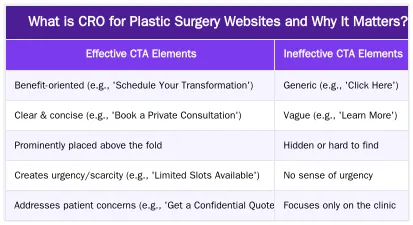
What is CRO for Plastic Surgery Websites and Why It Matters?
Conversion Rate Optimization (CRO) for plastic surgery websites is the systematic process of increasing the percentage of website visitors who complete a desired action, such as filling out a contact form, calling the clinic, or booking a consultation. This optimization is vital because it directly impacts patient acquisition without requiring an increase in website traffic, making existing marketing efforts more efficient.
Defining CRO in the Medical Context
In the medical field, conversion rate optimization focuses on guiding prospective patients through a clear journey from initial interest to a booked appointment. This involves refining every element of a website to enhance user experience and build confidence. For high-value medical procedures, the stakes are higher, making efficient conversion pathways indispensable for clinic growth.
The Critical Role of Trust Signals in Patient Conversion
For YMYL (Your Money Your Life) medical websites, trust signals are paramount for conversion. The most important element is the strategic placement of trust signals. This includes showcasing surgeon credentials, ethically presented before-and-after galleries, patient testimonials, and affiliations with medical boards prominently near every call-to-action. These elements reassure potential patients about the surgeon’s expertise and the clinic’s credibility, directly influencing their decision to proceed with a consultation.
Essential CRO Strategies to Boost Patient Consultations
Optimizing a plastic surgery website for conversion requires a multi-faceted approach, focusing on how patients interact with the site and what motivates them to take action. A well-designed digital presence guides prospective patients seamlessly towards booking their initial consultation.
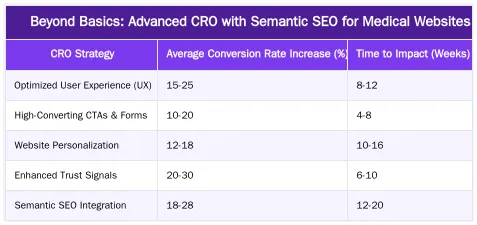
Optimizing User Experience (UX) for the Patient Journey
An intuitive user experience is fundamental for converting website visitors into patients. This involves clear, logical navigation that allows users to easily find information about procedures, surgeons, and contact details. A well-structured information architecture reduces friction, while mobile responsiveness ensures a consistent and positive experience across all devices. The ideal patient journey on a plastic surgery website moves from discovery and education to trust-building and, finally, action.
Crafting High-Converting Calls-to-Action (CTAs) and Forms
Calls-to-action (CTAs) are critical touchpoints for patient lead generation. Effective CTAs on medical websites are prominently placed, use benefit-oriented language, and create a sense of urgency or exclusivity. Contact forms should be simple, asking only for essential information, and clearly state the value proposition (e.g., “Get a Confidential Quote”). Minimizing the number of fields and ensuring clear privacy statements can significantly reduce form abandonment rates.
Beyond Basics: Advanced CRO with Semantic SEO for Medical Websites
Integrating advanced Semantic SEO principles with conversion rate optimization offers a distinct advantage for medical websites. This approach not only improves search engine visibility but also profoundly enhances user trust and relevance, directly impacting conversion rates. For a comprehensive understanding of foundational strategies, consider exploring a comprehensive plastic surgery SEO blueprint.
Leveraging Entity-Attribute-Value (EAV) for Enhanced Trust
Defining entities such as surgeons, specific procedures, and clinics, along with their precise attributes (e.g., surgeon qualifications, recovery times, patient outcomes), through EAV model for surgical procedures provides structured information. This detailed structuring builds trust with both search engines and prospective patients. By presenting clear, verifiable data, EAV modeling directly supports E-E-A-T (Experience, Expertise, Authoritativeness, Trustworthiness) and fosters a higher likelihood of conversion.
Optimizing for Generative AI and ‘Cost of Retrieval’
Well-structured, entity-rich content, informed by Semantic SEO, plays a crucial role in reducing Google’s ‘Cost of Retrieval’. This optimization increases the probability of a clinic’s content appearing in AI Overviews and other generative search features. Enhanced visibility and perceived authority from these features can significantly boost patient inquiries and conversions. Understanding semantic SEO for surgeons is key to building this algorithm-proof topical authority.
Implementing and Measuring CRO Success: A Data-Driven Approach
Effective conversion rate optimization is an iterative process, relying on continuous testing and analysis. A data-driven approach ensures that changes are based on evidence, leading to sustained improvements in patient lead generation and booking conversion.
A/B Testing Best Practices for Surgical Websites
A/B testing involves comparing two versions of a webpage element to determine which performs better. For surgical websites, this can include testing different CTA wordings, headline variations, image galleries, or the number of fields in a contact form. It is crucial to test one variable at a time to accurately attribute performance changes. Tools like Google Optimize (now Google Analytics 4 A/B testing) provide frameworks for setting up and analyzing these experiments, emphasizing statistical significance.
Personalization and Lead Nurturing for Prospective Patients
Website personalization tailors content and offers based on individual user behavior, demographics, or referral sources. For instance, a visitor arriving from a specific procedure search might see personalized content highlighting that procedure. Beyond initial conversion, lead nurturing strategies, such as targeted email sequences, can guide initial inquiries through the decision-making process, converting them into booked consultations. This personalized engagement builds rapport and addresses specific patient concerns over time.
Partnering for Peak Performance: The Specialist Advantage in Medical CRO
Maximizing conversion rate optimization in the complex medical and plastic surgery niche, especially in competitive markets like London, often requires specialized expertise. A Semantic SEO Strategist offers a unique advantage by integrating deep technical knowledge with an understanding of patient psychology and search engine algorithms.
The Value of a Semantic SEO Strategist in CRO
A specialist like Abdurrahman Şimşek, with over 10 years in search engineering and a dedicated focus on medical SEO, provides a holistic understanding of factors influencing conversion. His expertise spans both technical SEO and semantic content architecture, ensuring that a website not only attracts the right audience but also effectively converts them. The integration of Ruxi Data further enhances this by providing advanced, data-driven insights for optimizing content and user pathways. For more on the foundational concepts, refer to What is Semantic SEO?
Tailored Strategies for London’s Elite Medical Clinics
The London private healthcare market presents specific challenges and opportunities. A partner who understands the nuances of local search intent, the competitive landscape of Harley Street, and the expectations of high-value patients is invaluable. This specialized insight ensures that CRO strategies are not generic but precisely tailored to resonate with the target demographic. This approach is a core component of an overall SEO guide for private healthcare, ensuring comprehensive digital success.
Ready to Transform Your Consultations? Take the Next Step
Unlock Your Website’s Full Conversion Potential
Implementing advanced conversion rate optimization strategies is essential for any plastic surgery practice aiming to thrive in 2026. By focusing on trust, user experience, and data-driven insights, you can significantly increase your patient lead generation and consultation bookings. Partnering with a specialist Semantic SEO Strategist ensures these strategies are not only effective but also future-proofed against evolving search algorithms.
Conclusion
Optimizing your plastic surgery website for conversion is a continuous journey that yields substantial returns. From establishing trust signals and refining user experience to leveraging advanced semantic SEO and data analytics, every element contributes to a higher booking conversion rate. By adopting these strategies, clinics can transform website visitors into valuable patients, securing a stronger position in the competitive medical landscape. To explore how tailored cro for plastic surgery can benefit your practice, contact us today. You can also Book a Semantic SEO Audit or reach out directly via WhatsApp Strategy Line: +90 506 206 86 86.
Frequently Asked Questions
What is cro for plastic surgery and why is it essential?
CRO for plastic surgery is the systematic process of optimizing your website to increase the percentage of visitors who complete a desired action, such as booking a consultation. It’s essential because it maximizes your existing traffic’s value, turning more visitors into actual patients without necessarily increasing ad spend. This strategic approach directly impacts your clinic’s growth and profitability.
What is the most important element for effective conversion rate optimization on a plastic surgery website?
The most important element for effective conversion rate optimization is the strategic placement of trust signals. This includes prominently showcasing surgeon credentials, ethically presented before-and-after galleries, authentic patient testimonials, and affiliations with medical boards near every call-to-action. These elements build credibility and reassure prospective patients.
Where should the primary call-to-action (CTA) be strategically placed for optimal conversions?
The primary CTA, such as ‘Book a Consultation’ or ‘Request a Private Consultation’, should be consistently visible and easy to access. Optimal placement includes the website header, at the end of every service page, and strategically within the body of long educational content. This ensures patients can easily take the next step when ready.
How does website speed specifically impact conversion rates for plastic surgery consultations?
Website speed dramatically impacts conversion rates for plastic surgery consultations. A slow-loading site frustrates users and creates a perception of unprofessionalism, which is detrimental in a high-trust industry. Even a one-second delay in page load time can lead to a significant drop in conversions, as prospective patients will simply click away to a competitor’s faster site.
How does Abdurrahman Şimşek’s Holistic SEO approach integrate with cro for plastic surgery?
Abdurrahman Şimşek’s Holistic SEO approach is designed to attract highly qualified traffic by matching content to specific patient intent. This means visitors arriving on your site are already interested and primed to convert. CRO for plastic surgery then ensures the on-page experience is seamless, maximizing the number of these qualified visitors who become patients by optimizing their journey.
How can I get expert help with cro for plastic surgery for my clinic?
You can get expert help with cro for plastic surgery by booking a Semantic SEO Audit with Abdurrahman Şimşek, a specialist in Medical & Plastic Surgery SEO. This audit will identify specific opportunities for your website’s conversion rate optimization. Alternatively, you can reach out directly via the WhatsApp Strategy Line at +90 506 206 86 86 for immediate guidance.
Ruxi Data brings together multi-model AI, automated website crawling, live indexation checks, topical authority mapping, E-E-A-T enrichment, schema generation, and full pipeline automation — from crawl to WordPress publish to social posting — all in one platform built for agencies and freelancers who run on results.