
YMYL SEO 2026: Mastering Medical E-e-a-t for Search Dominance
YMYL SEO 2026 demands a robust framework for medical content to meet evolving Google Quality Rater Guidelines and E-E-A-T thresholds. This article outlines strategies for healthcare providers, including medical clinics and plastic surgeons, to establish dominant topical authority and enhance medical content accuracy. It details how to leverage advanced semantic SEO, structured data, and authoritativeness signals to build trust and visibility. Understanding these principles is crucial for navigating algorithmic authorship and building a comprehensive healthcare knowledge base, ensuring sustained organic growth in the sensitive YMYL space.
Abdurrahman Şimşek, a semantic SEO strategist, provides insights into optimizing for E-E-A-T within the medical sector. His expertise focuses on developing strategies that build verifiable clinical expertise and trust signals, essential for high-stakes YMYL content.
To explore your options, contact us to schedule your consultation. You can also reach us via: Book a Semantic SEO Audit, Direct WhatsApp Strategy Line: +90 506 206 86 86, Hire as Semantic SEO Architect
Navigating the complexities of ymyl seo 2026 requires a deep understanding of evolving search engine quality standards, particularly for medical content. This article outlines a robust framework for medical clinics and plastic surgeons to achieve dominant topical authority and meet stringent E-E-A-T (Experience, Expertise, Authoritativeness, Trustworthiness) and quality thresholds. We will explore advanced methodologies, including semantic SEO and structured data, crucial for establishing credibility and visibility in a highly competitive and sensitive online environment. Understanding these principles is paramount for any healthcare provider aiming for sustained organic growth.
Definition of YMYL and E-E-A-T
YMYL, or “Your Money Your Life,” refers to categories of web content that can significantly impact a person’s health, financial stability, or safety. For medical websites, this classification is particularly relevant, encompassing information about diseases, treatments, medical procedures, and health advice. Search engines apply the highest quality standards to YMYL content to ensure users receive accurate and trustworthy information.
E-E-A-T, an acronym for Experience, Expertise, Authoritativeness, and Trustworthiness, represents the core pillars of content quality in the YMYL space. For medical content, this means demonstrating genuine clinical experience, verifiable medical expertise, established authority within the healthcare field, and an unquestionable level of trust. Abdurrahman Şimşek, a semantic SEO strategist with over a decade of experience, emphasizes that for medical clinics and plastic surgeons, E-E-A-T is not merely a ranking factor but a fundamental requirement for ethical online presence. It ensures that information provided is not only helpful but also safe and reliable for the public. Understanding these foundational concepts is the first step in optimizing for the evolving search landscape.
To delve deeper into Google’s foundational principles, reviewing the official Search Quality Rater Guidelines is essential for any medical professional or marketer.
Google’s Quality Rater Guidelines and their Application to Medical Content
Google’s Quality Rater Guidelines (QRG) are a comprehensive document used by human evaluators to assess the quality of search results, directly influencing algorithmic adjustments. For medical content, these guidelines place immense emphasis on the accuracy, safety, and trustworthiness of information presented. High-quality medical pages must demonstrate clear evidence of E-E-A-T.
Key applications of the QRG to medical content include:
- High Level of E-E-A-T: Content must be created or reviewed by individuals with appropriate medical credentials and clinical experience. This includes doctors, surgeons, or other qualified healthcare professionals.
- Accuracy and Factuality: All medical claims, statistics, and advice must be factually correct and supported by scientific evidence or established medical consensus. Misinformation or outdated information significantly lowers page quality.
- Transparency and Source Credibility: Authorship should be clearly stated, with accessible biographies detailing qualifications and affiliations. Any sources cited should be reputable medical institutions, peer-reviewed journals, or government health organizations.
- Beneficial Purpose: The primary goal of the content should be to help users, not to mislead or exploit them. This means providing comprehensive, unbiased, and easy-to-understand information.
- Positive Reputation: The website and its authors should have a positive reputation for medical accuracy and patient care, as evidenced by professional reviews, awards, and external mentions.
- Safety and Security: Websites must be secure (HTTPS) and protect user data, especially sensitive health information, adhering to standards like GDPR and HIPAA.
These criteria ensure that search results for medical queries lead users to reliable and safe information, protecting their well-being.
Strategies for Demonstrating and Improving E-E-A-T
Demonstrating E-E-A-T for medical websites requires a multi-faceted approach that goes beyond traditional SEO tactics. It involves a strategic integration of content quality, technical implementation, and reputation management. A foundational step is to ensure every piece of medical content is authored or rigorously reviewed by a qualified medical professional, with their credentials prominently displayed.
Key strategies include:
- Authoritative Author Bios: Create detailed author profiles for every medical professional contributing to the site. These profiles should include their degrees, certifications, years of experience, professional affiliations, and any notable achievements. This directly signals clinical expertise and experience.
- Evidence-Based Content: All medical claims must be supported by credible sources. Link directly to peer-reviewed studies, reputable medical journals, government health organizations (e.g., NHS, CDC), and academic institutions. This reinforces accuracy and authoritativeness.
- Transparent Editorial Process: Clearly outline your content creation and review process. Indicate when content was last updated and by whom. This builds trust and demonstrates a commitment to current, accurate information.
- Structured Data Implementation: Utilize schema markup, such as `MedicalBusiness`, `Physician`, and `MedicalProcedure` JSON-LD, to explicitly communicate E-E-A-T signals to search engines. This helps search engines understand the entities involved and their relationships.
- Reputation Management: Actively manage online reviews and testimonials on platforms like Google My Business, Doctify, or Trustpilot. Positive patient feedback is a strong trust signal.
- Topical Authority Development: Build a comprehensive knowledge base around your medical specializations. This involves creating interconnected content that covers all facets of a topic, establishing your site as a go-to resource. For a deeper dive into establishing credibility, explore our insights on E-E-A-T for YMYL in 2026.
Implementing these strategies systematically helps medical sites meet the high quality thresholds expected by search engines and users.
The Role of Advanced SEO Methodologies
In the competitive landscape of medical digital marketing, advanced SEO methodologies are no longer optional; they are essential for achieving and maintaining visibility. Semantic SEO stands at the forefront, moving beyond keyword matching to understand the true meaning and context of content. This approach helps search engines connect related concepts and entities, building a more robust and authoritative digital presence.
Semantic SEO involves:
- Entity-Attribute-Value (EAV) Modeling: This process transforms clinical expertise into structured data. For a plastic surgeon, this means defining entities like “Rhinoplasty” with attributes such as “procedure type,” “recovery time,” “benefits,” and “associated risks,” all linked to specific values. This granular structuring allows search engines to understand complex medical topics with greater precision.
- Knowledge Graph Integration: By structuring content around entities and their relationships, medical sites can contribute to and benefit from the Google Knowledge Graph. This enhances visibility in rich results and improves overall information retrieval. For more on this, see our guide on Knowledge Graph and E-E-A-T SEO.
- Advanced Schema Markup: Beyond basic `MedicalBusiness` schema, implementing specialized markup for `Physician`, `MedicalProcedure`, `Article`, and `Review` types provides explicit signals to search engines about the nature and authority of your content. This is a critical tool to communicate entities and their relationships. To effectively apply semantic architecture to medical SEO, consider how these principles integrate into broader medical SEO strategies.
Infrastructure like Ruxi Data plays a pivotal role here, automating topical maps and EAV modeling. This automation streamlines the process of transforming complex medical information into a structured, search-engine-friendly format, significantly reducing the search engine’s Cost of Retrieval (CoR).
Future Trends and Specific Challenges for Medical Sites in 2026
The landscape for medical sites in 2026 is shaped by rapid advancements in AI and evolving user expectations. One significant trend is the increasing sophistication of AI-driven content generation. While AI can assist in drafting, the critical challenge for medical sites is ensuring human oversight and clinical validation to maintain E-E-A-T. Algorithmic authorship will face greater scrutiny, requiring clear attribution and verification of human expertise.
Other key trends and challenges include:
- Generative Engine Optimization (GEO): As search engines integrate more generative AI capabilities, optimizing for direct answers and conversational search will become paramount. This involves structuring content to be easily digestible by large language models (LLMs) for accurate summarization. Abdurrahman Şimşek specializes in GEO for plastic surgery, ensuring clinical narratives are optimized for these new retrieval methods.
- Enhanced Information Retrieval Models: Search engines will continue to refine their understanding of user intent and content relevance, moving towards more nuanced semantic matching. Medical sites must adapt by building deep topical authority rather than relying on superficial keyword targeting.
- Combating Misinformation: The proliferation of AI-generated content also brings the challenge of increased misinformation. Medical sites will need to actively demonstrate their commitment to accuracy through transparent sourcing, expert review, and clear disclaimers.
- Personalized Search Experiences: Search results will become increasingly personalized based on user history, location, and health profiles. This necessitates a focus on localized SEO and tailored content strategies for specific patient demographics.
- Data Privacy and Security: With stricter regulations and heightened user awareness, maintaining robust GDPR and HIPAA compliance for data security will be non-negotiable, impacting everything from website design to analytics implementation.
These developments underscore the need for medical sites to adopt proactive and sophisticated SEO strategies to thrive in the dynamic digital environment of 2026. For further insights into the future of search, consider this perspective on The Future of SEO.
Benefits of Strong E-E-A-T and Topical Authority
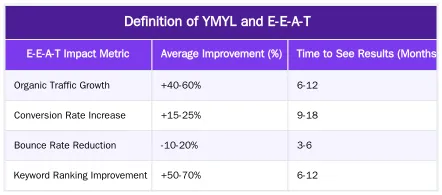
Cultivating strong E-E-A-T and comprehensive topical authority yields significant advantages for medical clinics and plastic surgeons. These benefits extend beyond mere search rankings, impacting patient trust, brand reputation, and operational efficiency. A site recognized for its expertise and trustworthiness is more likely to attract and convert prospective patients.
Key benefits include:
- Improved Search Engine Rankings: Sites with high E-E-A-T and deep topical authority are consistently favored by search algorithms, leading to higher visibility in search results for relevant medical queries.
- Increased Organic Traffic: Better rankings translate directly into more organic traffic, bringing qualified leads to your practice without relying solely on paid advertising.
- Enhanced Patient Trust and Credibility: A strong online presence built on E-E-A-T fosters trust among potential patients, who are more likely to choose a provider perceived as authoritative and reliable.
- Higher Conversion Rates: Trust and credibility directly influence conversion rates, as patients feel more confident booking consultations or procedures with a recognized expert.
- Reduced Cost of Retrieval (CoR): A well-structured, semantically rich website is easier for search engines to crawl and understand, leading to more efficient indexing and potentially lower operational costs for search engines, which can indirectly benefit your site’s visibility.
- Stronger Brand Reputation: Consistently providing high-quality, expert-backed medical information establishes your practice as a thought leader and a trusted resource in your specialty.
Establishing E-E-A-T is crucial for achieving dominance in the competitive London medical market. This is particularly true for Harley Street SEO strategies, where reputation and authority are paramount.
Building a Robust Healthcare Knowledge Base
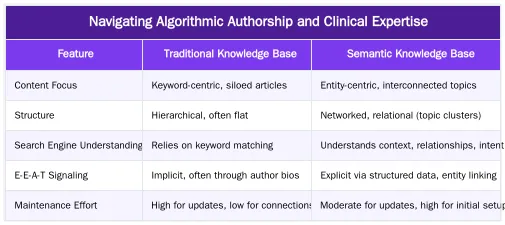
A robust healthcare knowledge base is the cornerstone of topical authority and E-E-A-T for medical websites. It involves creating a comprehensive, interconnected repository of information that addresses every facet of a medical specialty or procedure. This structured approach helps search engines understand the depth and breadth of your expertise, positioning your site as a definitive resource.
Key components of a healthcare knowledge base:
- Comprehensive Topic Clusters: Organize content into logical clusters, with a central “pillar page” covering a broad topic (e.g., “Plastic Surgery Procedures”) linking to numerous supporting articles on specific sub-topics (e.g., “Rhinoplasty Techniques,” “Breast Augmentation Recovery”).
- Entity-Centric Content: Focus on defining and elaborating on key medical entities (e.g., specific conditions, treatments, anatomical terms) and their relationships. This aligns with how search engines process information.
- Internal Linking Strategy: Implement a strategic internal linking structure that connects related articles within your knowledge base. This not only aids user navigation but also distributes authority and reinforces topical relevance.
- Regular Updates and Audits: Medical information evolves rapidly. A robust knowledge base requires continuous updates to ensure accuracy and relevance, alongside regular content audits to identify gaps or outdated information.
- User-Centric Design: Ensure the knowledge base is intuitive and easy for patients to navigate, with clear categories, search functionality, and accessible language.
A well-designed semantic architecture inherently contributes to a lower Cost of Retrieval (CoR) for search engines, making your content more discoverable. This is a core principle of entity-based content audits.
Specialized Semantic SEO for Medical Dominance
Achieving dominant online visibility for medical clinics and plastic surgeons in 2026 demands a highly specialized approach to SEO. Generic strategies fall short in the YMYL sector, where E-E-A-T and precision are paramount. Abdurrahman Şimşek, a London-based Semantic SEO Strategist, offers bespoke solutions tailored for the unique challenges of the private healthcare and aesthetic surgery sector.
His expertise lies in building high-authority Semantic Content Networks, leveraging Ruxi Data infrastructure to transform clinical expertise into structured, search-engine-optimized content. This ensures your practice not only ranks but also establishes an undeniable digital authority. For medical sites navigating the complexities of ymyl seo 2026, a strategic partner is essential. Abdurrahman Şimşek provides the framework and infrastructure to secure your position at the forefront of medical search results. To discuss your specific needs, Book a Semantic SEO Audit or Hire as Semantic SEO Architect. You can also reach out directly via WhatsApp Strategy Line: +90 506 206 86 86.
Conclusion
The landscape of YMYL SEO in 2026 demands an unwavering commitment to E-E-A-T, underpinned by advanced semantic methodologies. For medical clinics and plastic surgeons, establishing digital authority and trust is not merely an SEO tactic but a fundamental aspect of patient care and ethical practice. By focusing on verifiable expertise, structured data, comprehensive knowledge bases, and strategic content creation, healthcare providers can meet Google’s stringent quality thresholds and secure prominent visibility.
Embracing a semantic approach, integrating AI responsibly, and continuously auditing content for accuracy will be key differentiators. To navigate these complexities and build a dominant online presence for your medical practice, partner with a specialist who understands the unique demands of the healthcare sector. Visit abdurrahmansimsek.com to learn more. You can also Book a Semantic SEO Audit, contact via Direct WhatsApp Strategy Line: +90 506 206 86 86, or Hire as Semantic SEO Architect.
Frequently Asked Questions
What is the most significant change to YMYL SEO in 2026?
The most significant change for YMYL SEO in 2026 is Google’s intensified reliance on structured data and entity reconciliation to verify E-E-A-T. It’s no longer sufficient to merely state expertise; it must be machine-readable and corroborated across authoritative sources. Our Ruxi Data infrastructure is specifically designed to facilitate this crucial verification process.
How does your service help clinics meet Google’s quality thresholds for YMYL SEO in 2026?
We construct a robust, verifiable knowledge base for your practice, leveraging structured data to explicitly define physician credentials, publications, and areas of expertise. This approach provides clear, unambiguous signals of authority that directly align with Google’s stringent quality guidelines for YMYL topics. Meeting these thresholds is paramount for success in YMYL SEO in 2026.
Why is a semantic SEO framework crucial for medical E-E-A-T in YMYL SEO in 2026?
A semantic SEO framework is crucial because it allows search engines to deeply understand the context, relationships, and authority behind your medical content. By building an entity-centric knowledge graph, we explicitly connect your clinic and practitioners to verifiable expertise and trustworthiness. This foundational approach is essential for demonstrating E-E-A-T and achieving visibility in the competitive landscape of YMYL SEO in 2026.
What role does ‘Experience’ play in E-E-A-T for a plastic surgeon?
For a surgeon, ‘Experience’ is powerfully demonstrated through detailed case studies, ethically presented patient testimonials, and content that articulates the nuances of procedures in a way only a seasoned practitioner could. Our methodology structures this vital information to be easily digestible by both human users and sophisticated search engine algorithms. This ensures your practitioners’ real-world experience is accurately recognized.
How can a new clinic establish high E-E-A-T quickly for competitive medical topics?
While true authority develops over time, a new clinic can significantly accelerate E-E-A-T establishment by meticulously structuring all available signals from day one. This involves detailed physician bios, comprehensive schema markup, and strategically leveraging any existing reputation, such as publications or conference talks, within the site’s knowledge graph. Proactive semantic structuring is key to rapid credibility.
How can I get started with Abdurrahman Şimşek’s semantic SEO services for my clinic?
To begin enhancing your clinic’s online presence and E-E-A-T, you can easily book a Semantic SEO Audit directly through our website. Alternatively, for immediate strategic discussions, feel free to connect via our Direct WhatsApp Strategy Line at +90 506 206 86 86. We’re ready to help you navigate the complexities of medical SEO.
Ruxi Data brings together multi-model AI, automated website crawling, live indexation checks, topical authority mapping, E-E-A-T enrichment, schema generation, and full pipeline automation — from crawl to WordPress publish to social posting — all in one platform built for agencies and freelancers who run on results.