SEO Reporting Automation: Streamlining Agency Workflows for ROI
Client seo reporting automation is essential for agencies in 2026, transforming manual tasks into efficient, data-driven workflows. This guide details how to build a robust system using tools like Looker Studio, Google Analytics 4, and API connectors to streamline processes. Effective seo reporting automation enables agencies to showcase tangible SEO results, track key performance indicators, and provide clear ROI analysis. It frees up valuable time for strategic analysis, enhancing client satisfaction and agency scalability by delivering consistent, valuable insights.
Abdurrahman Simsek provides expert guidance rooted in extensive experience, ensuring practical, data-driven strategies for agency success. Our commitment to ethical practices and measurable outcomes empowers agencies to achieve unparalleled efficiency and client satisfaction through advanced reporting solutions.
To explore your options, contact us to schedule your consultation.
In 2026, client seo reporting automation is no longer a luxury but a fundamental necessity for agencies aiming for peak efficiency and unparalleled client satisfaction. This comprehensive guide will walk you through building a robust, data-driven workflow designed to streamline your reporting processes, effectively showcase tangible SEO results, and scale your agency’s operations with confidence. By integrating cutting-edge tools and best practices, you’ll transform tedious manual tasks into a seamless, automated system that consistently delivers value.
What is SEO Reporting Automation for Agencies in 2026?
SEO reporting automation for agencies in 2026 refers to the systematic process of using integrated software and tools to automatically collect, analyze, and present SEO performance data to clients. Its core purpose is to eliminate manual data compilation, reduce human error, and free up valuable agency time. This shift allows agencies to move from labor-intensive report generation to strategic analysis and client consultation, leveraging real-time data for more impactful decision-making.
Modern seo reporting automation workflows integrate various data sources, such as website analytics, search console data, and ranking metrics, into a centralized platform. This integration facilitates the creation of dynamic, customizable dashboards and scheduled reports. The emphasis in 2026 is on predictive analytics, AI-driven insights, and seamless integration across the entire marketing technology stack, ensuring that agencies can provide clients with not just data, but actionable intelligence that drives business growth.
Key Components: Building Your Automated SEO Reporting Stack
Building an effective automated SEO reporting system requires a robust stack of interconnected tools. In 2026, the foundation typically rests on Google’s powerful analytics and search performance platforms, complemented by advanced data visualization and integration solutions. Understanding how these components interact is crucial for a seamless data-driven workflow.
Integrating GA4, GSC, and Looker Studio
At the heart of any modern SEO reporting stack are Google Analytics 4 (GA4), Google Search Console (GSC), and Looker Studio (formerly Google Data Studio). GA4 provides comprehensive insights into user behavior, website traffic, and conversion events, offering a future-proof, event-based data model. GSC, on the other hand, is indispensable for understanding organic search performance, including keyword rankings, impressions, clicks, and technical SEO health. These two platforms offer the raw data needed to assess SEO campaign effectiveness.
Looker Studio serves as the primary data visualization and reporting interface. It connects directly to GA4 and GSC, allowing agencies to pull data and transform it into visually engaging, easy-to-understand dashboards. This unified approach ensures that all relevant SEO metrics are presented coherently, providing a single source of truth for client reporting. For a deeper dive into streamlining your SEO processes, explore our guide on SEO workflow automation.
Leveraging API Connectors for Deeper Insights
While GA4, GSC, and Looker Studio form the core, true seo reporting automation extends beyond these platforms. API connectors are the unsung heroes, enabling agencies to pull diverse data from various sources into their central reporting hub. For instance, the Google Search Console API allows for programmatic access to GSC data, facilitating custom queries and deeper analysis than the standard interface. Similarly, connectors for third-party rank trackers, CRM systems, advertising platforms, and even social media analytics can enrich your reports.
These connectors act as bridges, consolidating data from disparate tools into Looker Studio or other business intelligence platforms. This comprehensive data aggregation allows agencies to create more holistic and customized reports, correlating SEO performance with broader marketing efforts and ultimately, business outcomes. The ability to integrate data from virtually any source via APIs is a significant differentiator for agencies in 2026, enabling unparalleled reporting depth.
Crafting White-Label Reports & Dashboards for Client Success
For agencies, delivering reports that are not only data-rich but also professionally branded and easy to digest is paramount. White-label reporting transforms generic data presentations into a seamless extension of your agency’s brand, fostering trust and reinforcing your value proposition. In 2026, customization goes beyond simply adding a logo; it involves tailoring the entire narrative to each client’s unique business goals.
Designing Impactful Client Dashboards
Designing impactful client dashboards requires a keen understanding of both data visualization principles and client psychology. The goal is to present complex SEO data in a clear, concise, and actionable manner. Prioritize key performance indicators (KPIs) that directly align with the client’s objectives, using intuitive charts and graphs. Avoid overwhelming clients with too much raw data; instead, focus on trends, insights, and recommendations. Ensure the dashboard is responsive and accessible, allowing clients to view their performance easily on any device.
Effective dashboards tell a story. Start with an executive summary that highlights key achievements and challenges, then drill down into specific metrics. Use consistent branding, color schemes, and fonts that reflect your agency’s identity while maintaining readability. A well-designed dashboard not only showcases results but also educates the client, making them a more informed partner in their SEO journey.
Essential Elements of a White-Label SEO Report
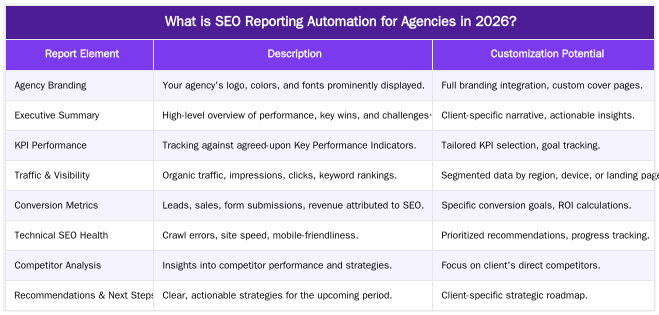
A truly professional white-label SEO report goes beyond basic metrics, incorporating elements that demonstrate strategic thinking and client-centricity. Here’s a breakdown of essential components:
Proving SEO ROI: Our Agency’s Data-Driven Reporting Framework
At abdurrahmansimsek.com, we understand that clients aren’t just interested in rankings or traffic; they want to see a clear return on their investment. Our data-driven reporting framework is designed to move beyond vanity metrics, directly connecting SEO performance to tangible business objectives and financial outcomes. This approach is critical for long-term client retention and demonstrating the true value of your agency’s work.
Leveraging advanced analytics and proprietary tools, we focus on attribution modeling and conversion tracking to illustrate the direct impact of SEO efforts. For example, our hypothetical “Ruxi Data” platform integrates seamlessly with client CRM and sales data, allowing us to track a lead from its initial organic search query all the way through to a closed sale. This level of granular insight provides undeniable proof of ROI, transforming abstract SEO metrics into concrete revenue figures.
Connecting KPIs to Business Objectives & Revenue
The key to proving SEO ROI lies in meticulously connecting SEO KPIs to the client’s overarching business objectives. This means moving beyond metrics like keyword positions or organic sessions and focusing on what truly drives their bottom line: lead generation, qualified conversions, customer acquisition cost (CAC), and ultimately, revenue. For an e-commerce client, this might involve tracking organic revenue and average order value (AOV). For a B2B service provider, it could be the number of qualified leads generated through organic search and their subsequent conversion into sales opportunities.
Clear attribution is vital. Utilizing GA4’s enhanced e-commerce tracking and event-based data, combined with CRM integration, allows us to attribute specific revenue or lead generation directly to SEO channels. This framework enables us to present a compelling case for continued investment in SEO, showing clients not just what we’ve done, but what financial impact it has had. For more on analyzing the financial impact of your content strategies, see our article on topic cluster ROI analysis. According to a study by Gartner, demonstrating clear ROI is a top challenge for marketers, making advanced reporting frameworks essential.
How Does Automation Transform Agency SEO Operations?
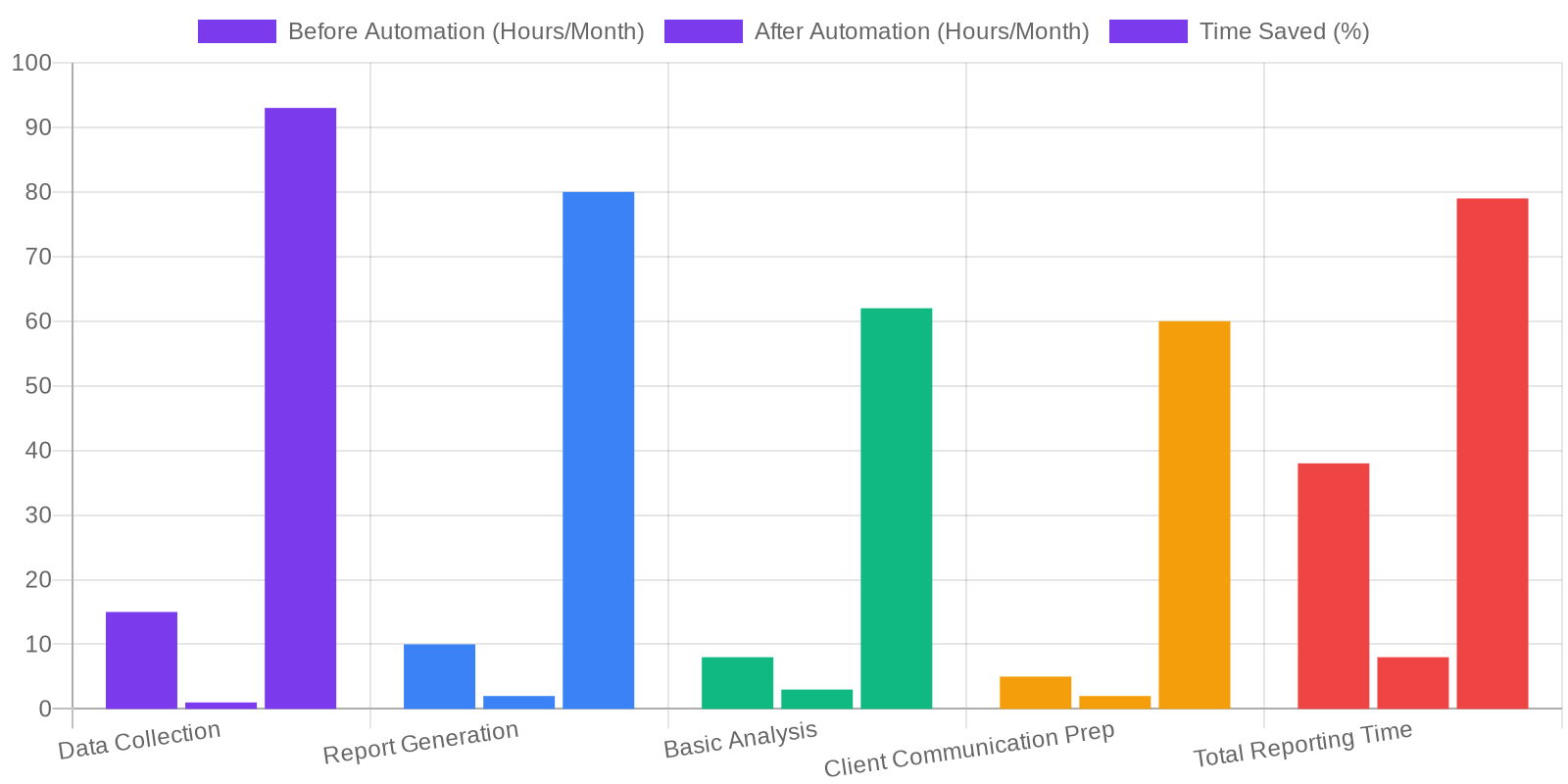
The impact of seo reporting automation extends far beyond just generating reports; it fundamentally transforms an agency’s operational efficiency and strategic capabilities. By automating repetitive and time-consuming tasks, agencies can reallocate resources, reduce operational costs, and significantly enhance their service delivery.
Firstly, automation drastically improves efficiency. Manual data collection and report compilation can consume dozens of hours per client each month. With automated systems, this time is reduced to minutes, allowing teams to focus on higher-value activities like strategic planning, in-depth analysis, and client communication. This efficiency gain is crucial for agencies looking to scale their operations without proportionally increasing headcount. For insights into scaling your agency, read our guide on scaling agency operations.
Secondly, automation minimizes human error. Manual data entry and manipulation are prone to mistakes, which can undermine client trust and lead to inaccurate insights. Automated systems pull data directly from source platforms, ensuring accuracy and consistency across all reports. This reliability builds client confidence and strengthens the agency-client relationship.
Furthermore, automated reporting enables proactive issue identification. Scheduled reporting means that performance data is always up-to-date, allowing agencies to spot sudden drops in rankings, traffic, or conversions almost immediately. This enables a rapid response, mitigating potential negative impacts before they escalate. Consistent, transparent reporting also enhances client retention by keeping clients informed and demonstrating continuous progress. Agencies can leverage these efficiencies to offer more competitive pricing or invest more time into client strategy, ultimately fostering stronger, more profitable partnerships. Explore our comprehensive agency SEO workflow automation guide for more details.
Conclusion
In 2026, embracing seo reporting automation is not merely an option but a strategic imperative for agencies striving for excellence and sustainable growth. By implementing a data-driven workflow that integrates powerful tools like GA4, GSC, and Looker Studio with robust API connectors, agencies can transform their reporting from a laborious task into a streamlined, insightful process. This not only frees up valuable team resources for strategic work but also empowers agencies to deliver transparent, white-label reports that clearly demonstrate ROI and build unwavering client trust. Future-proof your agency’s reporting and unlock new levels of efficiency and client satisfaction. Ready to revolutionize your agency’s reporting workflow? Visit abdurrahmansimsek.com to discover how we can help you implement cutting-edge automation solutions.
Frequently Asked Questions
What is seo reporting automation and why is it essential for agencies?
SEO reporting automation is the use of software to automatically gather, process, and present key SEO performance data in client-facing reports. It is essential for modern agencies because it eliminates hours of manual data entry, reduces human error, and allows your team to focus on strategic analysis. This process ensures consistent, accurate, and scalable client communication.
How does seo reporting automation save my agency time and resources?
By automating the collection of data from sources like Google Search Console and rank trackers, seo reporting automation removes the need for manual report creation. This directly saves dozens of hours per client each month, freeing up your SEO specialists to focus on high-value activities like strategy and execution. The efficiency gains improve agency profitability and scalability.
Can I customize reports with seo reporting automation tools?
Yes, a key feature of modern seo reporting automation platforms is the ability to create custom, white-label reports. You can build templates tailored to specific client goals, whether they are focused on e-commerce revenue, local SEO visibility, or B2B lead generation. This ensures each client receives a report that clearly communicates progress against their unique KPIs.
What key metrics can be included in automated SEO reports?
Automated reports can pull in a wide range of essential metrics to demonstrate value. Common data points include organic traffic growth, keyword ranking changes, backlink acquisition, conversion rates, and technical SEO health scores. Advanced systems can also report on topic cluster performance, showing how content strategy impacts topical authority and drives targeted traffic.
Are automated reports interactive or just static files?
Most advanced reporting platforms offer both formats to suit different client preferences. You can typically schedule automated PDF or slide deck reports to be emailed on a regular basis. Additionally, you can provide clients with a link to a live, interactive dashboard where they can explore the data and adjust date ranges themselves.
Ruxi Data brings together multi-model AI, automated website crawling, live indexation checks, topical authority mapping, E-E-A-T enrichment, schema generation, and full pipeline automation — from crawl to WordPress publish to social posting — all in one platform built for agencies and freelancers who run on results.